

 InfoSearched
Brain and Machine Integration Converging
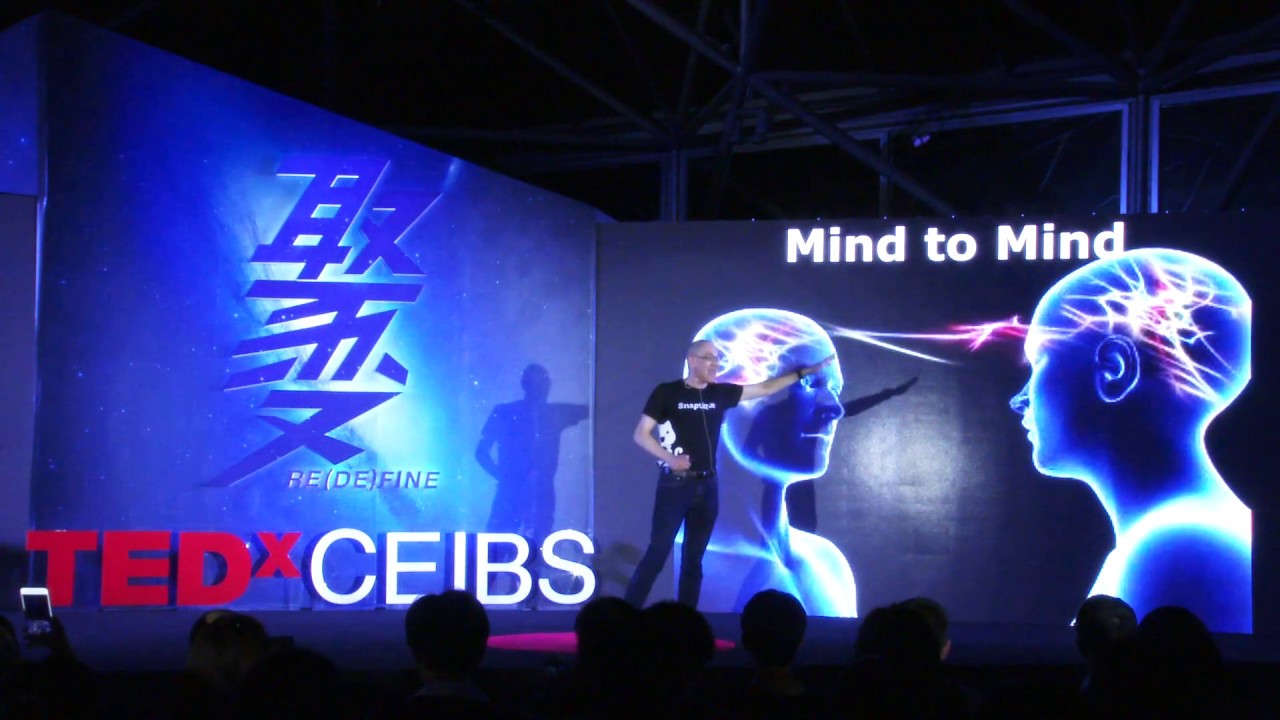
At TEDxCEIBS, entrepreneur and investor Steve Hoffman — known across Silicon Valley as “Captain Hoff” — laid out the case for brain-computer interfaces as the next major platform shift, one that could make keyboards, touchscreens, and even voice assistants look as primitive as punch cards. Hoffman, the CEO of startup accelerator Founders Space, spent his 18 minutes walking through the physical and cognitive bottlenecks built into how humans currently talk to their devices. His conclusion: the fix isn’t a better interface, it’s no interface at all.
- Hoffman argued current input methods — typing, tapping, voice commands — are fundamentally limited by hands, screens, and environmental noise, creating a bottleneck between human intent and machine response.
- He detailed the shift from invasive brain surgery toward non-invasive wearables and ultra-thin, flexible implants designed to read neural pathways without traumatic procedures.
- He tied BCI advances to concrete use cases already emerging in medicine, including devices letting paralyzed patients move prosthetic limbs and systems that decode commands directly from thought.
The Bottleneck Hoffman Wants to Eliminate
Hoffman opened by dismantling the assumption that today’s human-computer interaction is already efficient. Typing and tapping demand fine motor control that’s cumbersome at best and inaccessible for people with disabilities. Voice interfaces, meanwhile, still misfire constantly in noisy rooms or with unusual accents. His framing was blunt: the technology isn’t intuitive enough to anticipate what a person wants, so people are still forced to translate their intent into a format a machine can parse.
That translation step, in Hoffman’s telling, is the real cost of the current era of computing — a layer of friction between a thought and an action that BCI technology is designed to strip away entirely.
From Traumatic Surgery to Flexible Implants
Hoffman traced the hardware side of the story, from early, highly invasive brain-surgery implants toward a new generation of ultra-thin, flexible neural interfaces built to sit against neural pathways with far less physical trauma. Alongside those implants, he pointed to non-invasive wearables that can pick up neural signals without cutting into the skull at all — a spectrum running from consumer-grade headsets to precision medical-grade hardware.
Technology still isn’t intuitive enough to predict our actions and give us the response we actually want — and that’s the gap brain-computer interfaces are built to close.
He cited real advances already in motion: brain implants helping paralyzed patients control prosthetic limbs, and systems capable of detecting commands straight from a user’s thoughts, without any physical gesture at all. Readers following the broader push into neural hardware can find related coverage in “This Could Be a Tragedy For Humanity” | The First Brain Chip Implant.
Medicine, Gaming and Education as Early Proving Grounds
Hoffman was explicit that BCI’s first real-world payoff would land in medicine. Neurosurgeons, he argued, could use BCI systems to map brain activity and pinpoint injuries or tumors with far more precision than current imaging allows. From there, he extended the case into education, suggesting BCI-driven tools could adapt instruction in real time for children with learning difficulties, and into gaming and entertainment as further commercial proving grounds for the same underlying signal-decoding technology.
That commercial trajectory — medical accessibility first, cognitive augmentation and direct mind-to-machine control following — is the throughline of Founders Space’s own bet on the sector, and it echoes broader discussion of where prosthetics and assistive hardware are headed, detailed in Beyond bionics: how the future of prosthetics is redefining humanity.
The Ethical Price Tag
Hoffman didn’t close on optimism alone. He pressed the audience on what it means to connect human consciousness directly to a digital network: cognitive privacy, data security, and the risk that decoded neural signals become just another dataset to be harvested or hacked. He called for multi-disciplinary research — neuroscience, engineering, ethics, and policy working in tandem — rather than letting the hardware race ahead of the safeguards.
That warning lands squarely in the same territory as ongoing debates over AI and data control, covered in The danger of AI is weirder than you think.
Hoffman’s bet, laid out to the TEDxCEIBS crowd, is that the companies solving the surgery problem — thinner electrodes, wireless signal transmission, less trauma per implant — are the ones who’ll own the next platform after smartphones. Founders Space is already positioned across that pipeline through its network of more than 50 partners in 22 countries, betting early on exactly the startups Hoffman spent 18 minutes describing.





Most AMAZING Recent Technology!
subnetting is simple
Google Stadia – BIGGER than the PS5 & Xbox 2?
Cisco LIVE Europe 2020 – Jet Suit Flight & Talk by Richard Browning
How Tech Designed for Space Is Saving Lives on Earth