

 InfoSearched
A motorcycle with rotors instead of wheels just cleared the biggest hurdle for any flying vehicle: it actually works, and someone is willing to pay six figures for one.
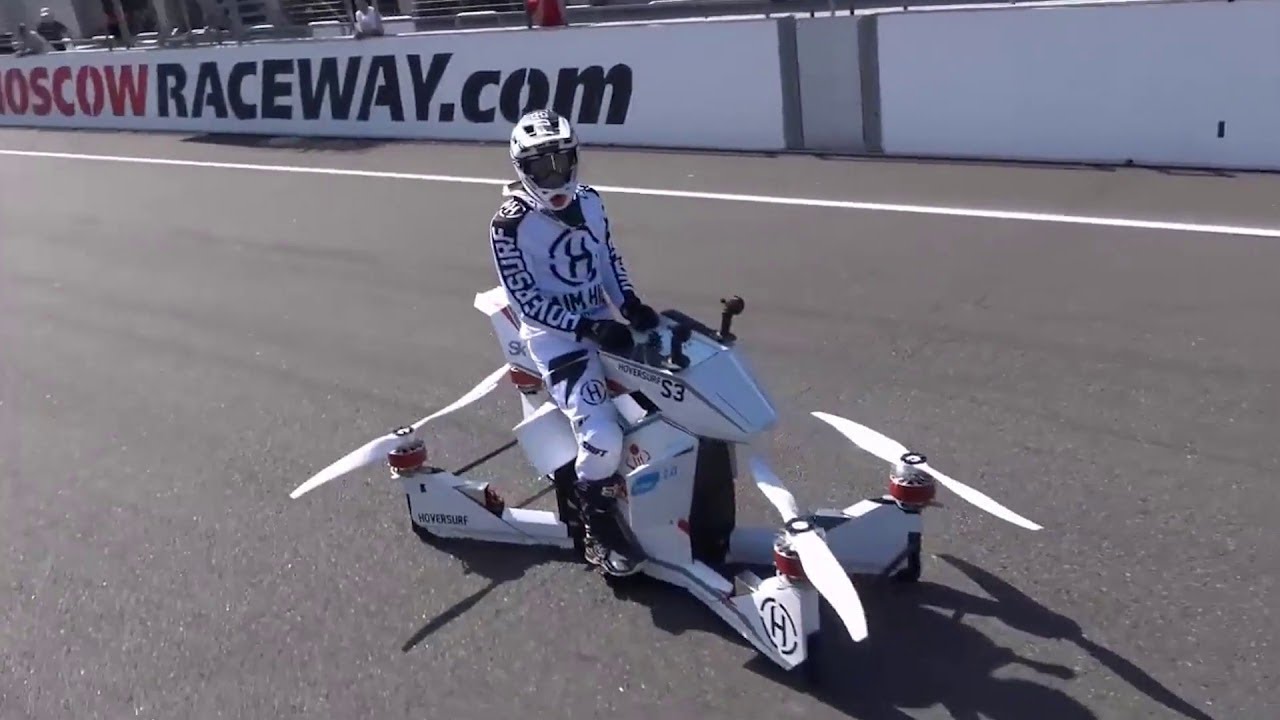
Hoversurf, the Russian startup behind the Scorpion series, has spent years turning a drone-and-motorcycle mashup into something closer to a product than a stunt. The company’s Scorpion-3 and its commercial descendant, the S3, strip away the rotor arms of a typical drone and wrap twin-blade propellers directly around a single rider’s seat. The result looks like a chopper that skipped the wheels entirely and went straight to hovering.
- Hoversurf CEO Alexander Atamanov’s team built the S3 around a carbon fiber monocoque frame weighing just 114 kg (253 lbs), light enough to qualify under FAA Part 103 as an ultralight — meaning no pilot’s license required in the U.S.
- Dubai Police signed a memorandum of understanding with Hoversurf at GITEX Technology Week to test the hoverbike as a first-responder unit for congested or hard-to-reach areas, with pilot training underway ahead of a planned 2020 deployment.
- Hoversurf opened pre-orders for a limited-edition S3 at $150,000, a price that came bundled with a mandatory $10,000, three-day training package and flight suit.
Mechanisms of Scorpion Flight Locomotion
The Scorpion-3 runs on electric power the same way a multirotor drone does, just scaled up and reoriented around a rider instead of a camera gimbal. Software caps the S3’s top speed at 96 km/h (60 mph), though earlier prototypes topped out closer to 69 km/h (43 mph). Altitude is deliberately restrained too — onboard LiDAR sensors keep normal operation between 4.6 and 5 meters (15 to 16 feet) off the ground, even though unconstrained test flights have pushed the craft to an unofficial altitude record of 28.5 meters (93.5 feet). Flight time runs 15 to 40 minutes depending on payload and conditions, putting it in the same experimental-transport conversation as projects covered in 10 Coolest New Methods of Transportation.
The Dubai Police Pilot Program
Dubai has been the most aggressive early adopter of Hoversurf’s hardware. After the GITEX Technology Week agreement, Dubai Police began training officers to fly the Scorpion-3 as a way to reach accident scenes, crowded events, or terrain that patrol cars and even motorcycles can’t navigate quickly. The plan called for the unit to be operational by 2020, positioning the hoverbike less as a novelty and more as an actual piece of emergency-response equipment — a pitch similar in spirit to the jet-suit demonstrations detailed in Cisco LIVE Europe 2020 — Jet Suit Flight & Talk by Richard Browning.
The Blade Problem, and What Hoversurf Did About It
The exposed twin-blade propellers mounted around the rider’s seat are the single biggest sticking point in every conversation about the Scorpion. A blade failure at speed could send high-velocity fragments toward the pilot or destabilize the craft outright, and that risk shaped years of public skepticism. Hoversurf answered it in stages: by CES 2019, updated configurations showed rotor guards, ducted fan elements, and redundant automated landing protocols designed to kick in during a low-battery situation or motor failure.
The S3’s $150,000 price tag came with a mandatory $10,000, three-day training package and flight suit.
Specs and What It Costs to Actually Own One
Buying a Scorpion isn’t like buying a motorcycle off a showroom floor. The 114 kg carbon fiber frame keeps the S3 under Part 103’s ultralight threshold, which is the entire reason it can legally fly without a pilot’s license in the United States. But Hoversurf’s pre-order terms made clear this isn’t a casual purchase — the $150,000 sticker price is just the entry fee before the required training and gear get added on top.
Whether Dubai Police actually put Scorpion-3 units into daily rotation by their 2020 target will be the real test of whether this thing graduates from trade-show attraction to working hardware. Until then, the S3 sits in the same category as the other single-seat eVTOL projects chasing FAA Part 103’s loophole — expensive, capped, and still flying with the rotors in plain view.




Beyond bionics: how the future of prosthetics is redefining humanity
Tesla Valve Explained With Fire
What we learned from building a medical technology startup | Fouad Al-Noor | TEDxTUBerlin
10 Most Insane Secret Military Technologies
New technology makes troops invisible