

 InfoSearched
A documentary about algorithms decided the best stage to premiere on was a marketing festival on the French Riviera.
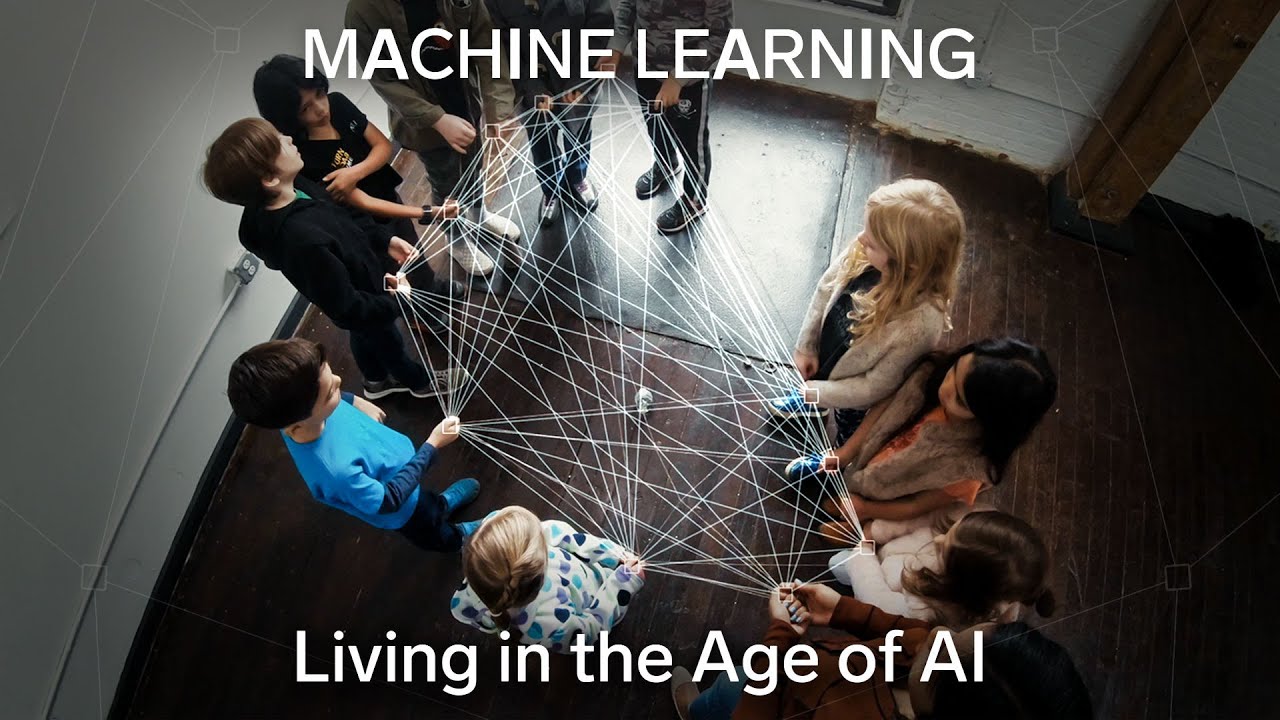
“Machine Learning: Living in the Age of AI” isn’t a hand-wringing warning about robots taking over — it’s WIRED’s 46-minute attempt to show what machine learning actually looks like when it shows up in ordinary places: a classroom, a farm field, a retiree’s living room. Directed by Christopher Cannucciari and executive produced by Wonbo Woo, the film was produced by WIRED’s editorial team with backing from advertising agency McCann Worldgroup, and it’s built as Part 1 of a two-part look at how AI is reshaping daily life and modern marketing.
- The film premiered June 19, 2019, at the Cannes Lions International Festival of Creativity before WIRED posted it to YouTube on June 20, 2019.
- It’s framed as Part 1 of a two-part documentary initiative from WIRED and McCann Worldgroup examining AI’s impact on everyday life and marketing.
- On-camera analysis comes from Udacity co-founder Sebastian Thrun, ANU professor and Intel Senior Fellow Genevieve Bell, and computer scientist and author Kai-Fu Lee.
A Cannes Premiere for a Machine Learning Explainer
Debuting a tech documentary at Cannes Lions — an event built for ad executives, not engineers — was a deliberate choice. McCann Worldgroup’s involvement signals the film’s real audience: brands and marketers trying to understand what machine learning means for their industry, not just data scientists. WIRED’s decision to follow the Cannes premiere with a same-week YouTube release, on June 20, 2019, made the film immediately accessible outside the festival circuit, which fits the documentary’s own pitch that AI shouldn’t be treated as an insider’s subject.
The Experts Doing the Explaining
Rather than lean on a single narrator, the film rotates through voices who’ve spent careers on different sides of the machine learning conversation. Sebastian Thrun helped build Google’s self-driving car program before co-founding Udacity; Genevieve Bell studies the cultural side of technology as an Intel Senior Fellow and Australian National University professor; Kai-Fu Lee has written extensively on the U.S.-China AI race. Together they walk through the mechanics of how models train on large datasets — the same underlying process covered from a different angle in The danger of AI is weirder than you think.
Case Studies Instead of Abstractions
The documentary’s real strength is refusing to stay theoretical. It follows hobbyists and teenagers building their own neural networks, a young innovator developing early-detection diagnostic models for pancreatic cancer, farmers running automated drones to check soil fertility, elementary school students being introduced to algorithmic tools in class, and a 70-year-old retiree navigating virtual gaming. Autonomous vehicles get their own segment too, tying the film’s grassroots stories back to the industrial-scale AI work Thrun’s background represents.
From a teenager’s neural network experiment to a pancreatic cancer detection model — the film’s case studies span nearly every age and income bracket machine learning now touches.
The Risks the Film Doesn’t Skip
“Machine Learning: Living in the Age of AI” doesn’t pretend the technology is risk-free. It confronts deepfakes and synthetic digital manipulation, personal data surveillance, algorithmic bias baked into training data, and the labor dislocation automation can cause — themes that echo the jobs-focused argument in AI is coming for your jobs…so what?. Its conclusion is that regulatory frameworks and ethics guidelines matter, but that machine learning’s upside for productivity and problem-solving outweighs its near-term hazards.
Part 1 wrapped its case at Cannes in June 2019 with that optimistic-but-cautious thesis intact; Part 2 of the WIRED-McCann series was billed to dig further into what AI means for marketing specifically, meaning the 46 minutes covered here are really just the setup for the second half of the pitch.




A DAY (NIGHT) in the LIFE of a NOC ENGINEER!
THE FIRST EVER HOVERBIKE IN THE WORLD
Tesla’s Cybertruck Tug-of-War Stunt Was Pointless
Beast Electric 4X4: Off Road Vehicle
The ONE THING That Holds New Programmers Back