

 InfoSearched
Boyan Slat just built a machine that hunts plastic before it ever reaches the sea.
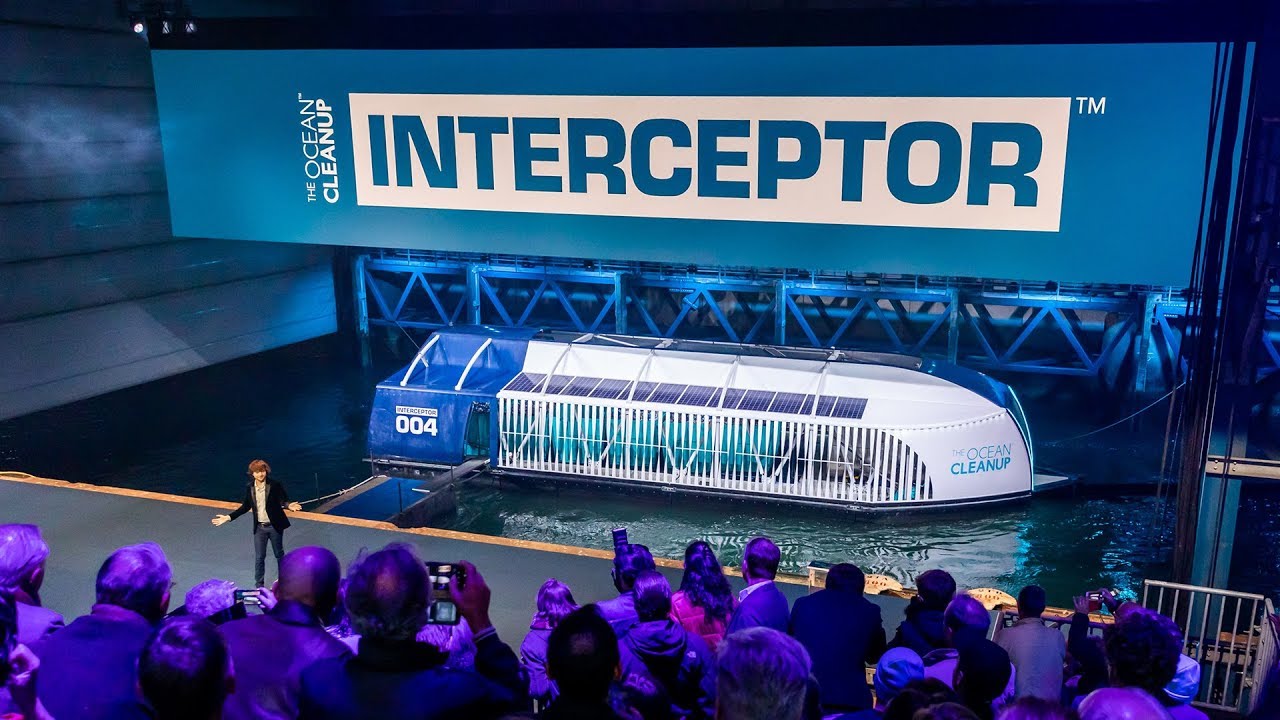
On October 26, 2019, the 25-year-old founder and CEO of The Ocean Cleanup stood up and unveiled the Interceptor, an autonomous, solar-powered vessel built to intercept trash in rivers rather than chase it across the open ocean. The pivot is deliberate: rivers, not the Pacific gyres, turn out to be the real delivery system for marine plastic. Slat’s organization is now targeting the 1,000 most polluting rivers on the planet, which it estimates account for roughly 80% of all plastic that flows into the ocean.
- The Interceptor can extract about 50,000 kilograms of debris a day under typical conditions, and up to 100,000 kilograms daily under optimal flow.
- Four units existed at the time of the unveiling, with two already running in Jakarta’s Cengkareng Drain and Malaysia’s Klang River in Selangor.
- The Ocean Cleanup is aiming to deploy Interceptors on the 1,000 most polluting rivers worldwide by 2025.
The Functional Mechanics of Interceptors
The design leans on mechanics rather than exotic engineering. A floating barrier stretches across the river to funnel trash toward a single opening, where a solar-powered conveyor belt hoists the debris out of the water. From there, automated shuttles distribute the collected waste into onboard dumpsters, and the whole system runs without emitting exhaust fumes. It’s built to operate continuously, unmanned, in currents where a static boom or a manned skimmer boat would be impractical or too costly to run around the clock.
That autonomy matters because rivers don’t pollute on a schedule. Monsoon surges, tidal drainage canals like Cengkareng, and industrial waterways like Klang all dump plastic unevenly, and a system that needs a crew on standby can’t keep pace. The Interceptor’s solar power and automated shuttle system are meant to let it sit in place and keep working through conditions that would sideline a conventional cleanup boat.
The Numbers Behind the 1,000-River Target
Slat’s team didn’t pick 1,000 rivers arbitrarily — it’s the shortlist of waterways the organization identified as the source of roughly 80% of river-borne plastic reaching the ocean. That concentration is the whole rationale for the Interceptor strategy: rather than mounting an open-ocean operation against a diffuse, already-dispersed garbage patch, The Ocean Cleanup is trying to close the tap at a few hundred choke points before the material ever gets that far.
We aim to tackle the 1,000 most polluting rivers, responsible for about 80% of ocean plastic pollution, before the end of 2025.
Hitting that target within five years means scaling well past four hulls. The Cengkareng Drain and Klang River deployments were the proving ground, but the plan already had Vietnam’s Mekong Delta and Santo Domingo in the Dominican Republic lined up as the next installations, spreading the technology across a mix of drainage canals and full river systems rather than staying confined to one type of waterway.
Solar Power Doing the Heavy Lifting
Every part of the extraction process — the conveyor belt, the shuttle system, the onboard electronics — runs on solar energy, which keeps the Interceptor from needing fuel deliveries or a diesel generator in locations where logistics are already difficult. It’s the same underlying bet other solar-hulled projects are making, from solar-powered yacht designs to boats generating their own hydrogen fuel at sea — that marine cleanup and marine propulsion don’t need to run on combustion to be practical at scale.
The trade-off is exposure: solar output isn’t constant, and a river vessel sitting in a drainage canal for years needs its panels and electronics to survive monsoon debris, silt, and boat traffic. The Jakarta and Selangor units were effectively the field test for whether that hardware could hold up long enough to justify building dozens more.
The next real marker to watch is whether the Mekong Delta and Santo Domingo units actually go into the water on schedule — that’s the point where the Interceptor stops being a proof-of-concept in two rivers and starts looking like the beginning of an 1,000-river rollout.





New technology makes troops invisible
A DAY (NIGHT) in the LIFE of a NOC ENGINEER!
THE FIRST EVER HOVERBIKE IN THE WORLD
My Regrets as a Computer Science Student
What we learned from building a medical technology startup | Fouad Al-Noor | TEDxTUBerlin