

This Man Launched a New Internet Service Provider from His Garage | Freethink DIY Science
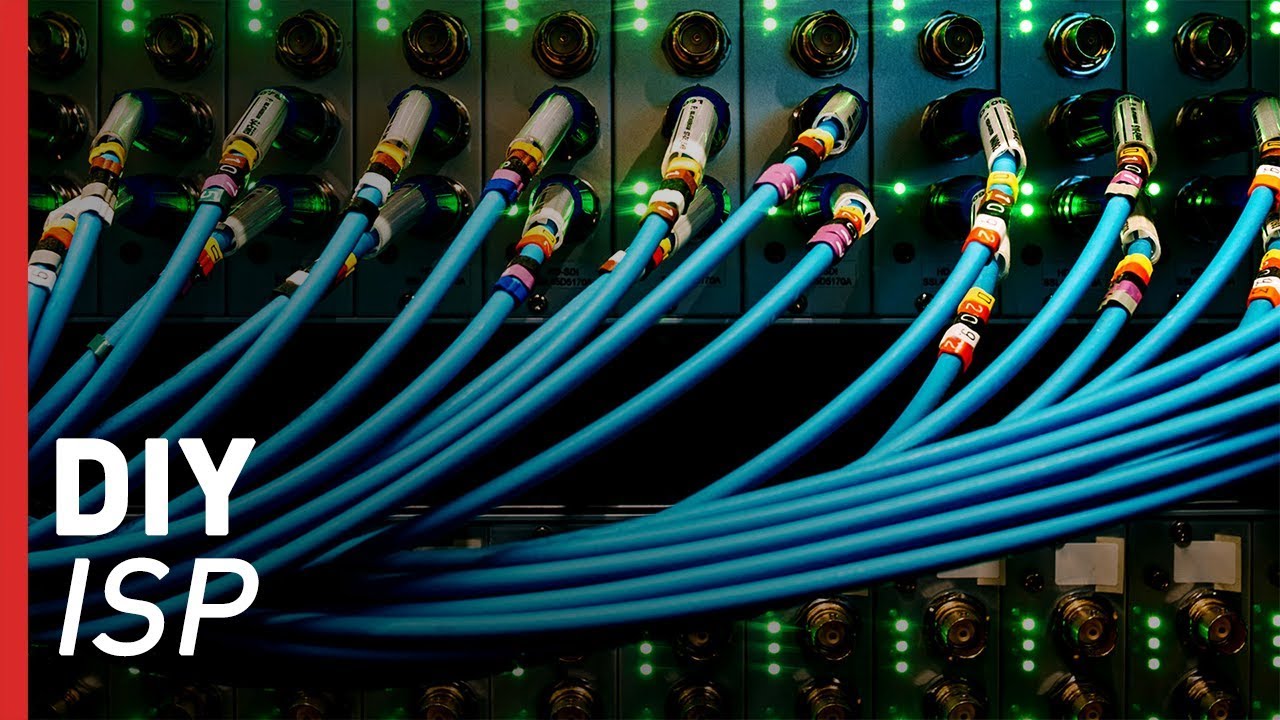
 InfoSearched
A garage in a 400-household coastal town just out-hustled the cable and satellite guys.
Brandt Kuykendall didn’t set out to become an internet service provider. He just wanted his daughter Emma to be able to finish her high school homework without the family’s satellite connection buckling under the load. Instead, the Dillon Beach, California resident ended up building his own wireless ISP out of his garage, wiring up roughly 170 of the town’s 400 households along the way.
- A single monthly cellular bill of $707 pushed Kuykendall to stop patching together mobile hotspots and build real infrastructure instead.
- He spent months negotiating directly with AT&T to run a commercial fiber-optic line to a utility pole and into his garage — the hub he nicknamed “Command Central.”
- By late 2017, Dillon Beach Internet Service was serving about 170 of the town’s 400 households for a flat $50 to $70 a month, with no data caps.
From Luddite Phase to Command Central
Kuykendall had already walked away from the tech industry once, describing himself as going through a “Luddite phase” before Dillon Beach’s connectivity problem dragged him back in. Satellite service in the isolated coastal village was slow, unreliable, and expensive, and there was no cable or DSL infrastructure worth mentioning. When Emma’s schoolwork became the breaking point, he started experimenting with a router and cellular modems to string together a connection for himself and about 25 neighbors.
That patchwork setup worked well enough to prove demand, but it wasn’t sustainable — hence the $707 bill that convinced him he needed a real backbone rather than a stack of cellular modems. So Kuykendall spent months chasing down AT&T to get a commercial fiber-optic line run to a utility pole and dropped straight into his garage, the room he’d come to call Command Central.
Building the WISP by Hand
Once the fiber line was in, Kuykendall mounted Mimosa networks point-to-point wireless transmitters on his roof and installed small plastic receiver dishes on the homes of subscribers around town — the basic architecture of a wireless ISP, or WISP, built without a corporate budget or a fleet of trucks. He compared the whole rig to the Millennium Falcon, joking that “it may not look like much, but it sure is fast.”
“It may not look like much, but it sure is fast.”
The comparison wasn’t just a joke about aesthetics. Anyone curious about how the hardware side of a setup like this actually functions can see the same point-to-point logic play out in how professional network operations run day to day, and readers who want a plainer walkthrough of how IP addressing works under the hood might find subnetting is simple a useful primer on the terminology Kuykendall was wrestling with in his garage.
Underselling the Big Players
Kuykendall ran Dillon Beach Internet Service with his wife, Kelli, the town’s postmistress, and the pitch to neighbors was simple: unlimited high-speed data, free equipment and installation, for a flat fee of $50 to $70 a month — no data caps, no fine print. For a village that had been stuck paying for capped, sluggish satellite plans, that was a dramatically better deal, and word spread fast.
By late 2017, the network covered about 170 of Dillon Beach’s roughly 400 households, with residents dropping their satellite subscriptions in favor of Kuykendall’s garage-built network. The demand kept climbing well beyond what a hobby project was ever designed to handle, turning Command Central into something closer to a real, if scrappy, local carrier. For readers interested in how connectivity gaps get closed elsewhere without waiting on the big carriers, the debate around municipal and DIY broadband shows up again in New Free internet 100% – New Technology Free internet 2019.
Garage ISP Success Reveals Trends
Dillon Beach Internet Service never pretended to be a national carrier. It was one guy, a fiber drop, a rooftop of Mimosa dishes, and a wife running the numbers between shifts at the post office — and it still out-served a town that the big providers had left on satellite. That’s the whole story: a 400-household village where 170 homes now get unlimited broadband for $50 to $70 a month because one resident got tired of a $707 phone bill and decided to fix it himself.







Solar Yacht: Silent Yachts 55 Technical Tour
MIT’s Breakthrough Energy Technologies
The Try Guys Try 13 Future Technologies At Google
He built a monster machine! – Guinness World Records
This Man Launched a New Internet Service Provider from His Garage | Freethink DIY Science