

 InfoSearched
Ten builds that prove a vehicle doesn’t have to stick to one road, one medium, or one speed limit.
THE MAGNUM’s rundown of unusual vehicles skips past the sedans and pickups entirely and goes straight to the machines that make engineers argue at dinner parties. The video, “10 Most Unusual Vehicles,” pulls together commercial prototypes, independent fabricator projects, and custom builds that ignore the usual rulebook — cars that swim, bicycles that outrun sports cars, and aircraft you can legally drive to the grocery store first. None of it is CGI concept art; these are real, physical machines built by real shops and hobbyists.
- Amphibious cars in the countdown are engineered with watertight hulls and deployable marine propulsion, letting them drive off a boat ramp and keep going as a boat.
- The fastest two-wheelers featured are jet-engine and rocket-assisted bicycles capable of exceeding 300 km/h — north of 200 mph — on nothing but two thin tires.
- The lineup also includes road-drivable aircraft with folding wing mechanisms built to take off from standard runways, plus the auto rickshaw, or tuk-tuk, as a globally common light-mobility platform.
The Amphibious Car That Doesn’t Stop at the Shoreline
The amphibious entry in the video isn’t a novelty pool toy — it’s built around a sealed, watertight hull and a propulsion system that deploys once the wheels leave dry ground. Drive it down a boat ramp, and the same chassis that just handled a highway on-ramp switches over to marine power for open water. The engineering challenge is less about the water and more about the transition: sealing every seam, gap, and door well enough that a car-shaped object doesn’t just sink the moment it stops being a car.
That watertight-hull-plus-marine-propulsion formula is the throughline for every amphibious vehicle worth mentioning, whether it’s a purpose-built recreational model or a converted daily driver. It’s a niche corner of the industry, but a persistent one — enough that it shows up again and again in roundups like 10 OF THE COOLEST MEANS OF TRANSPORT.
Two Wheels, Jet Power, 200-Plus MPH
The video’s high-speed segment centers on jet-engine and rocket-assisted bicycles — stripped-down frames with a turbine or rocket motor bolted where the pedals used to matter. These builds are engineered purely for straight-line speed runs, and according to the video’s own figures, the fastest of them clear 300 km/h, or better than 200 mph, on a bicycle frame with no roll cage, no airbags, and barely any bodywork.
A bicycle frame, a jet engine, and a straight-line run past 300 km/h — no roof, no roll cage, no seatbelt.
That kind of extreme speed experimentation sits at the far edge of personal transportation, closer to land-speed-record culture than commuting. It’s the same instinct that drives projects covered in Fastest Electric Wheel Ever! — take the smallest, lightest possible platform and see exactly how far raw power can push it.
A Car That Folds Its Wings and Takes Off
The road-drivable aircraft featured in the countdown folds its wings flat against the fuselage for street driving, then unfolds them for takeoff from a standard runway. It’s designed to solve the “last mile” problem that’s dogged flying-car concepts for decades: a plane is useless if you still need a car to get to the airport, so this design tries to be both, switching configurations rather than requiring two separate vehicles.
The folding-wing mechanism is the whole engineering story here — it has to lock rigidly enough for flight loads yet fold compactly enough to fit in a highway lane and a standard parking space. That single mechanical compromise is what separates a genuine road-legal aircraft from a static concept render.
The Tuk-Tuk’s Case for Practical Weirdness
Not every unusual vehicle in the video is chasing a speed record or a patent. The auto rickshaw, or tuk-tuk, makes the list precisely because it’s ordinary in some countries and exotic in others — a three-wheeled, lightweight platform built for tight urban streets, short fares, and cheap upkeep rather than top speed. It’s the counterpoint to the jet bicycles and folding-wing planes: proof that “unusual” doesn’t always mean extreme, sometimes it just means built for a problem — dense, narrow city traffic — that a standard four-wheel sedan handles poorly.
That personal-urban-mobility angle is the same thread running through 10 Coolest New Methods of Transportation, where compact, purpose-built platforms keep winning out over anything trying to be a one-size-fits-all car.
Put the jet bicycle next to the tuk-tuk and the range on display is the whole point of THE MAGNUM’s list — one machine is chasing 200-plus mph on two wheels, the other is just trying to beat gridlock on three, and both count as “unusual” for completely opposite reasons.






Tesla Earthquake Machine [3D Printed]
What we learned from building a medical technology startup | Fouad Al-Noor | TEDxTUBerlin
Goodbye Silicon! Your Next Computer Chip Could Be Made of Gallium Oxide
Hyperloop Explained | The B1M
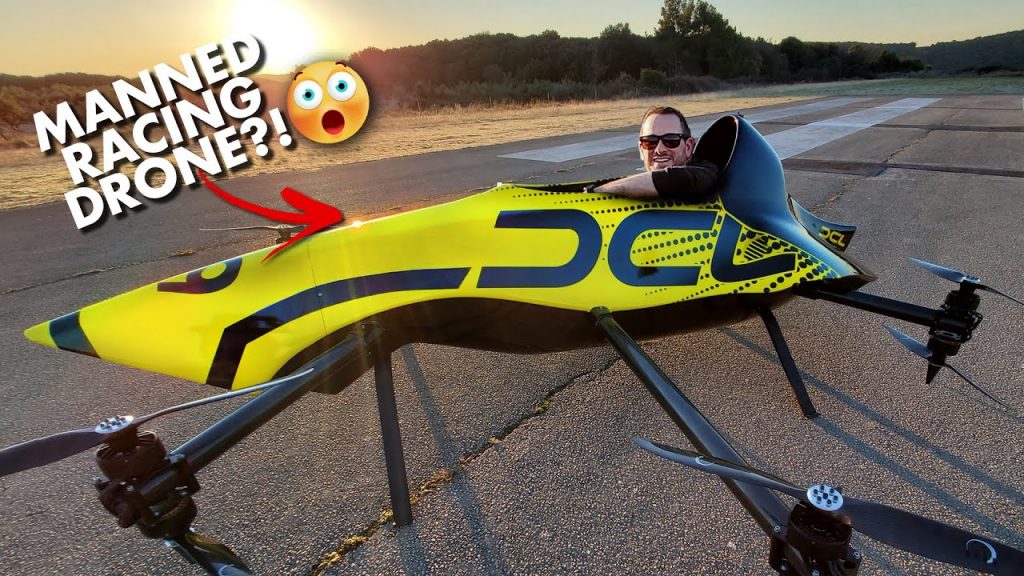
First Manned Aerobatic RACING Drone – Will it FLIP? ????