

 InfoSearched
A rocky world just outside our cosmic backyard might have what it takes to hold liquid water.
NASA’s Transiting Exoplanet Survey Satellite has turned up its first nearby candidate for a habitable super-Earth, and it’s orbiting a small, cool star just 31 light-years away in the constellation Hydra. The system around GJ 357 turned out to hold not one planet but three, with the outermost world sitting right at the edge of where liquid water could survive. Announced in late July 2019, the find gives astronomers a real target — close enough, bright enough, and quiet enough — to actually study.
- TESS first flagged GJ 357 in February 2019 after spotting recurring dips in the star’s light every 3.9 days, caused by a transiting “hot Earth” designated GJ 357 b, about 22 percent larger than our own planet.
- Follow-up radial velocity data stretching back two decades uncovered two more planets: GJ 357 c, at least 3.4 Earth masses on a 9.1-day orbit with surface temperatures around 260°F, and GJ 357 d, a super-Earth on a 55.7-day orbit.
- GJ 357 d has an estimated minimum mass six times Earth’s and a rocky radius one to two times Earth’s size, receiving roughly the same stellar radiation Mars gets from the Sun.
A Dim Star With a Crowded System
GJ 357 is an M-type dwarf about one-third the mass and size of the Sun and roughly 40 percent cooler. Dim, red stars like this one make up the majority of the Milky Way’s population, and their planets are far easier to detect than those around Sun-like stars because the dimmer host makes even small transits stand out. That’s exactly how TESS caught GJ 357 b crossing its star’s face every 3.9 days — a tight orbit that puts the planet 11 times closer to its star than Mercury is to the Sun.
Once astronomers zeroed in on the system, ground-based radial velocity measurements — data on how much the star wobbles as planets tug on it gravitationally — filled in the rest of the picture. That’s how GJ 357 c and GJ 357 d turned up, neither of which transits in a way visible from Earth but both detectable through their gravitational fingerprints on the star.
The Case for GJ 357 d
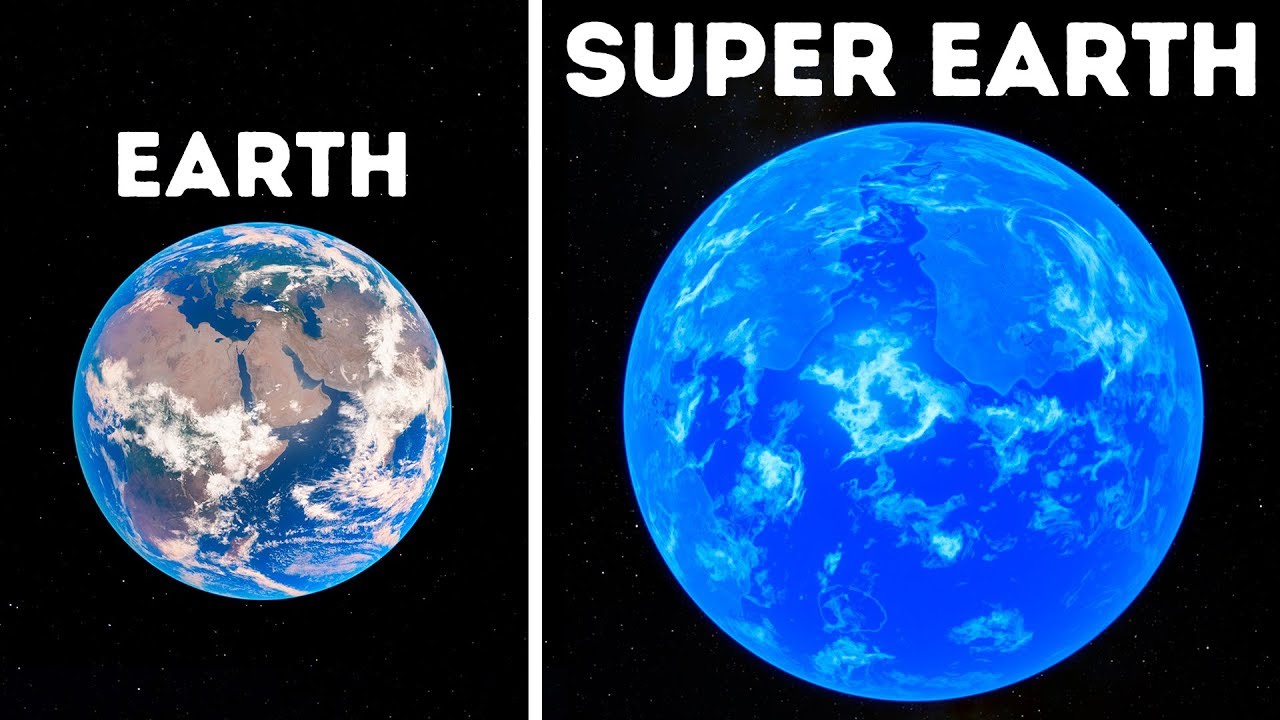
GJ 357 d is the planet drawing the attention. Orbiting every 55.7 days at about one-fifth of Earth’s distance from the Sun, it sits within the outer edge of GJ 357’s habitable zone — the band around a star where temperatures could allow liquid water on a rocky surface. Its estimated minimum mass, six times Earth’s, and its rocky radius, somewhere between one and two Earth radii, put it squarely in the super-Earth category rather than a gas-heavy mini-Neptune.
The catch is atmosphere. GJ 357 d receives about as much radiation as Mars gets from the Sun, which on its own wouldn’t be enough to keep water liquid. A modeling team led by Cornell University astronomer Lisa Kaltenegger found that if the planet holds a sufficiently dense atmosphere, it could trap enough heat through a greenhouse effect to keep surface water from freezing solid.
If GJ 357 d has a dense enough atmosphere, it could keep liquid water on its surface — just like Earth does.
System Importance for Search Optimization
GJ 357 d’s proximity is what separates it from the long list of other habitable-zone candidates found over the past decade. At 31 light-years, it’s close enough that upcoming observatories should eventually be able to characterize its atmosphere directly, rather than just inferring conditions from mass and orbital distance. That kind of atmospheric read-out is the actual next step in figuring out whether a rocky planet outside our solar system could support life, and it’s the reason NASA built TESS in the first place — the same push toward next-generation space capability covered in The next generation of space technology.
TESS itself is still early in its survey, launched in April 2018 to scan nearby bright stars for exactly this kind of small, close-in planet that older missions like Kepler were less suited to catch. GJ 357 d is the mission’s first habitable-zone super-Earth close enough for serious atmospheric follow-up, but astronomers expect it won’t be the last given how many red dwarfs TESS still has left to scan.
The broader payoff of missions like this — turning raw orbital data into tools that matter beyond astronomy — echoes the kind of spinoff benefit chronicled in How Tech Designed for Space Is Saving Lives on Earth, where instruments built for one purpose in orbit end up reshaping work back on the ground.
Whatever GJ 357 d’s atmosphere turns out to hold, the number that matters most right now is 55.7 — the days it takes to complete one orbit, tight enough that a future space telescope with the right spectrograph could, in theory, catch its light passing through that atmosphere and finally settle whether Kaltenegger’s team was onto something real.









New technology makes troops invisible
The Extreme Physics Pushing Moore’s Law to the Next Level
This researcher created an algorithm that removes the water from underwater images
MIT’s Breakthrough Energy Technologies
New Brain Computer interface technology | Steve Hoffman | TEDxCEIBS