

 InfoSearched
Google says you won’t need a $500 console to play next-gen games — but you will need really good Wi-Fi.
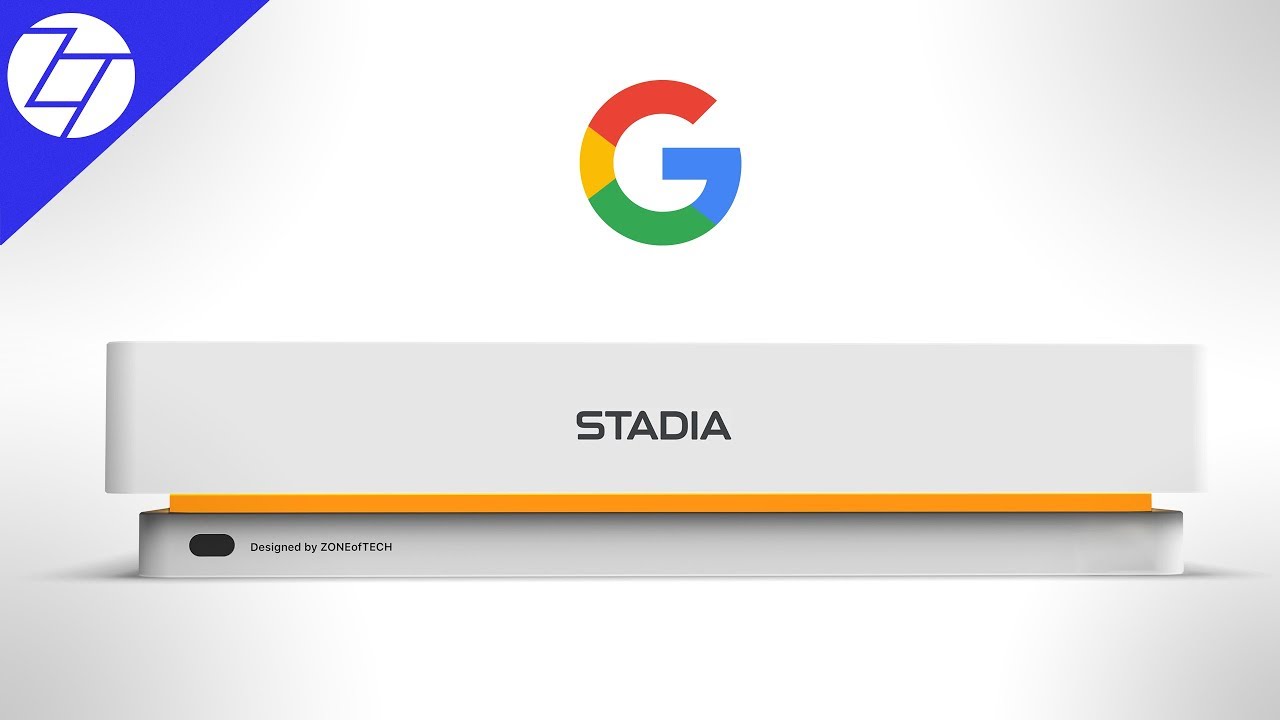
Google Stadia landed at GDC 2019 with a number designed to make Sony and Microsoft sweat: 10.7 teraflops of GPU compute, more than the PS4 Pro and Xbox One X combined. No box under the TV, no discs, no downloads — just a stream. The question tech channel ZONEofTECH set out to answer is whether that’s actually enough to threaten the PS5 and Microsoft’s next-generation Xbox, codenamed Project Scarlett.
- Stadia promises up to 4K resolution at 60 frames per second with HDR, run entirely through Google’s data centers rather than local hardware.
- A standalone Wi-Fi controller costs $69, with a Stadia Pro subscription tier priced at $9.99/month launching in November 2019.
- Sony’s PS5 (teased by lead architect Mark Cerny in April 2019) and Microsoft’s Project Scarlett (detailed at E3 2019 for a late 2020 release) both pack custom AMD Zen 2 CPUs, Navi graphics with hardware ray tracing, and ultra-fast custom NVMe SSDs.
Core Features of Google Stadia
Stadia’s pitch is elegantly simple: kill the console entirely. Because the rendering happens in Google’s servers, there’s no hardware to buy, no multi-hour game installs, and no local storage limits to manage. A player can start a game on a TV, pick it back up on a phone, and finish it on a laptop without ever touching a download bar. Combined with the 10.7 teraflop figure Google touted at GDC, the platform is positioned as instant, device-agnostic gaming that doesn’t care what box is sitting in the living room.
The subscription math backs up the accessibility pitch. Stadia Pro comes in at $9.99 a month, dramatically undercutting the $500-plus price tags expected for next-gen consoles. For anyone weighing whether to drop hundreds on new hardware, the calculus Stadia presents is straightforward: pay less, skip the box, stream instead.
The Bandwidth Problem
The catch is that Stadia’s entire experience lives and dies by the connection running to the house. Hitting that promised 4K/60fps stream requires roughly 35 Mbps of sustained bandwidth, and the platform can burn through as much as 20 GB of data per hour — a number that turns fast against anyone on a capped internet plan. Where a PS5 or Scarlett owner just plays offline when the router dies, a Stadia session simply stops.
Stadia’s 10.7 teraflops sounds bigger than the PS4 Pro and Xbox One X combined — but none of it matters if the stream drops.
That reliance on infrastructure is the single biggest gap between Stadia and its console rivals. Sony and Microsoft are building machines that work the same whether the household has fiber internet or spotty rural broadband. Google is betting that most players’ internet will simply be good enough — a bet that, in mid-2019, remained unproven at scale.
Sony and Microsoft Platform Strategies
Cerny’s April 2019 comments on the PS5 and Microsoft’s E3 2019 reveal of Project Scarlett both leaned on the same core promise: custom AMD Zen 2 CPUs paired with Navi-based graphics carrying hardware-accelerated ray tracing. The bigger practical upgrade for most players, though, is the custom NVMe SSD in both machines, which is designed to all but eliminate the loading screens that have defined console gaming for two decades. Backward compatibility and full offline play round out the pitch — the exact two things Stadia can’t currently match.
Readers who want a broader sense of how fast hardware is moving elsewhere in tech can see similar generational leaps covered in Intel’s Core i9-10980XE review, where raw silicon performance claims get put through the same kind of scrutiny Stadia’s teraflop figure deserves.
The Verdict on Disruption vs. Dominance
Stadia’s case for disruption is real: no hardware cost, no install times, no storage ceiling, and a $9.99 monthly price that undercuts a console purchase many times over. But without proven latency mitigation, a real offline mode, and an exclusive software library to rival Sony’s or Microsoft’s first-party lineups, the analysis lands on a simple conclusion — Stadia can carve out a lane, but it isn’t positioned to simply leapfrog the PS5 or Xbox Scarlett on day one. For readers tracking where consumer hardware is headed generally, the pattern shows up across categories, from gaming to recent breakthroughs in consumer tech more broadly.
November is the number to watch. That’s when Stadia Pro actually launches and Google has to prove the 35 Mbps promise holds up outside a GDC demo room — not against a press release, but against whatever the household Wi-Fi is actually doing that night.



The danger of AI is weirder than you think
Google Stadia – BIGGER than the PS5 & Xbox 2?
This researcher created an algorithm that removes the water from underwater images
Boyan Slat unveils The Ocean Cleanup Interceptor
The FUTURE of Energy Efficient Technology!