

 InfoSearched
A green light on the skin turns a blind needle stick into a guided one.
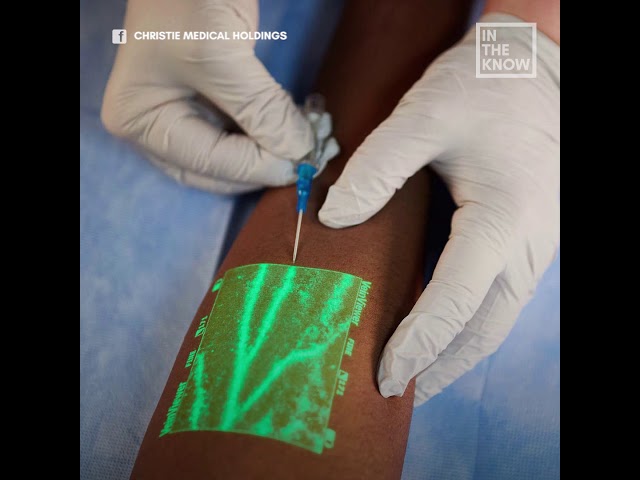
Anyone who has watched a nurse hunt for a vein knows the routine: the tourniquet, the tapping, the second or third stick after the first one misses. A device called the AccuVein AV500 is changing that math by projecting a live map of a patient’s veins directly onto the skin, giving clinicians a visual target before the needle ever goes in.
- The AV500 uses Class 1 near-infrared laser light, which hemoglobin absorbs differently than surrounding tissue, to project a green-light map of veins, valves and bifurcations onto the skin’s surface.
- Clinical data cited by AccuVein show the device can boost first-stick success by up to 350%, cut patient-reported pain by up to 59%, and shorten vascular access procedures by 78%.
- The technology is used in more than 5,000 healthcare facilities across over 130 countries and is recognized by the Infusion Nurses Society (INS) as a standard of care for vascular visualization competency.
Underlying Scanner Operational Mechanisms
The AV500 is a handheld, battery-powered scanner that weighs under 285 grams — about 10 ounces — and requires no contact with the patient’s skin. A clinician holds it 6 to 10 inches above the injection site, and near-infrared light bounces back differently off hemoglobin than it does off surrounding tissue. The unit reads that contrast and projects an in-focus green overlay showing the vein’s path down to its center line, using AccuVein’s patented True Center alignment technology.
Because the device is permanently factory-aligned, there’s no calibration step before use — a nurse picks it up and starts scanning immediately. It also converts to hands-free operation by mounting on a wheeled stand or a bed rail, freeing both of the clinician’s hands for the actual insertion.
Importance of First-Stick Accuracy
More than 90% of hospitalized patients require some form of IV therapy, which makes vein access one of the most repeated procedures in any hospital — and one of the most common sources of patient complaints. A missed stick isn’t just uncomfortable; it delays medication, extends procedure time, and in difficult cases can mean multiple clinicians attempting the same line.
Clinical data cited by AccuVein credit the AV500 with increasing first-stick success by up to 350% and cutting procedure time by 78%.
Those numbers explain why the device has found particular traction with populations known for tricky venous access — young children, elderly patients, and anyone with a history of IV drug use or scarred veins. Fewer attempts also lowers the odds of complications like infiltration or localized infection at the injection site.
Adoption Across the Healthcare System
The AV500 isn’t a lab prototype — it’s already embedded in clinical workflow at thousands of sites. The Infusion Nurses Society has folded vein visualization into its standard-of-care guidance for vascular access competency, which has pushed the technology from a novelty gadget into something closer to routine equipment on a med-surg floor or in an ER. It joins a broader wave of devices covered on this site’s medical technology beat, where tools once considered cutting-edge move quickly into everyday hospital use, a pattern also visible in New Medical Technology In 2019.
The broader shift toward non-invasive, sensor-driven tools at the bedside mirrors what’s happening elsewhere in care delivery, as outlined in 8 Medical Procedures That Are Improving Lives — small hardware changes that add up to fewer repeat procedures and less time spent on tasks that used to require guesswork.
For a device that costs a fraction of most hospital capital equipment, the AV500’s case is simple: fewer needle sticks, less time per line, and a nurse who doesn’t have to apologize for missing on the first try.





Power to Gas, a future energy solution to store renewable electricity
Tesla Autopilot Drives Straight Towards Concrete Barrier on Highway
Making a DRIVETRAIN and Installing the Micro V4 ENGINE on the RC Car!
The Try Guys Try 13 Future Technologies At Google
9 AMAZING NEW GADGETS YOU CAN BUY ON AMAZON AND ONLINE