

 InfoSearched
Equifax lost 147 million records. Uber hid a breach affecting 57 million. Nick Espinosa says none of that was really about the hackers.
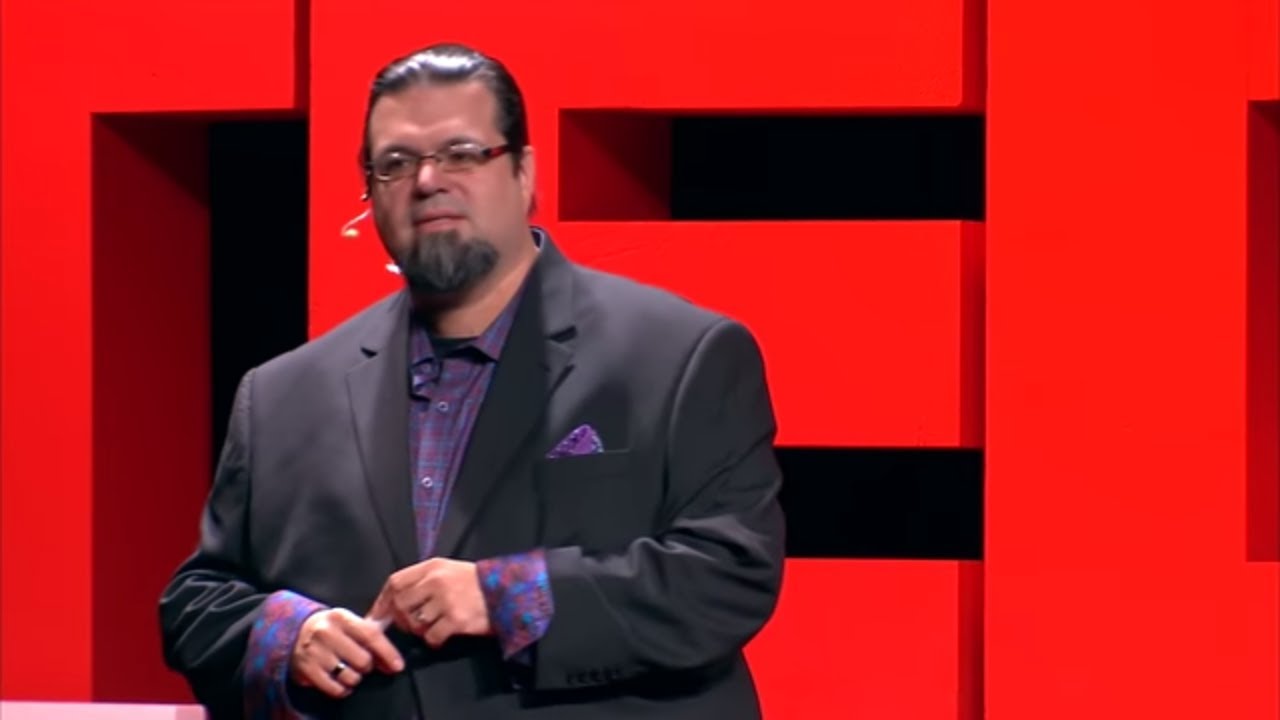
At TEDxFondduLac in August 2018, the Chicago-based cybersecurity consultant and Security Fanatics founder laid out what he calls the Five Laws of Cybersecurity — a plain-English framework for why breaches like Equifax and Uber keep happening despite billions of dollars spent on defense. His argument isn’t that companies are lazy. It’s that most of them are solving the wrong problem.
- Espinosa built his framework around five stated laws, starting with “if there is a vulnerability, it will be exploited” and ending with “when in doubt, see law number one.”
- The talk was published to TEDx Talks on September 7, 2018, and repeatedly cites the Equifax and Uber breaches as real-world proof of the pattern.
- His core claim: technological innovation itself creates new attack surface, and human trust — not weak code — is usually the actual point of failure.
The Five Laws, In His Words
Espinosa’s framework doesn’t read like a technical manual — it reads like a set of physics laws, deliberately blunt. The five, as he presented them: “If there is a vulnerability, it will be exploited.” “Everything is vulnerable in some way.” “Humans trust even when they shouldn’t.” “With innovation comes opportunity for exploitation.” And finally, “When in doubt, see law number one” — a loop back to the start, meaning the system never fully closes.
That circularity is the point. Espinosa isn’t offering a checklist that ends once you’ve completed it. He’s describing a condition that persists as long as systems keep evolving, which in his framing is permanently.
“When in doubt, see law number one.”
Equifax and Uber as Case Studies
Espinosa didn’t build this framework in the abstract. He pointed to the Equifax breach, which exposed roughly 147 million people’s personal records, and Uber’s breach affecting 57 million riders and drivers, as evidence that scale doesn’t equal security. Both were massive, resourced organizations. Both got hit anyway.
His point is that neither breach is best explained as a story about sophisticated attackers outsmarting brilliant engineers. It’s a story about law two — everything is vulnerable in some way — meeting law three, that humans trust even when they shouldn’t, whether that trust shows up in a login credential, a vendor relationship, or a piece of software nobody bothered to double-check.
Innovation Presents Dual Competitive Outcomes
The fourth law — that innovation creates opportunity for exploitation — is where Espinosa pushes back against the instinct to treat new technology as automatically safer than what came before. Every new device, API, or cloud service that gets deployed is also a new door. The more a company modernizes, the more doors it has to watch, not fewer.
That’s a different way of framing progress than most product launches suggest, and it tracks with the broader unease running through recent coverage of consumer and enterprise tech — see, for instance, the concerns raised in The danger of AI is weirder than you think. Espinosa’s version is narrower and more procedural: it’s not that innovation is bad, it’s that every rollout needs to be paired with an honest accounting of what it just exposed.
Reframing the Human Factor
Espinosa’s third law is arguably the hardest for organizations to act on because it isn’t a software problem. People click links from senders they recognize, reuse passwords because remembering forty of them is unreasonable, and grant access to vendors because refusing feels rude or slows down a deal. None of that is stupidity — it’s trust operating exactly as it evolved to, in an environment it wasn’t built for.
That’s why his framework ends where it starts. If humans will always default to trust and every system will always carry some vulnerability, then security work is never a finished project — it’s a standing practice, the same way network engineers treat monitoring and patching as ongoing rather than one-time fixes, a discipline covered in pieces like A Day (Night) in the Life of a NOC Engineer.
Espinosa closes the loop by insisting the five laws aren’t meant to be memorized and shelved — they’re meant to be a lens applied every time a company adds a vendor, a device, or a login. Law one always waits at the other end of law four.





“This Could Be a Tragedy For Humanity” | The First Brain Chip Implant
Futuristic Technology You Can Buy Today
10 Most Insane Secret Military Technologies
AI is coming for your jobs…so what?
The danger of AI is weirder than you think