

 InfoSearched
A software engineer looks back at his own college transcript and finds the gaps that mattered most.
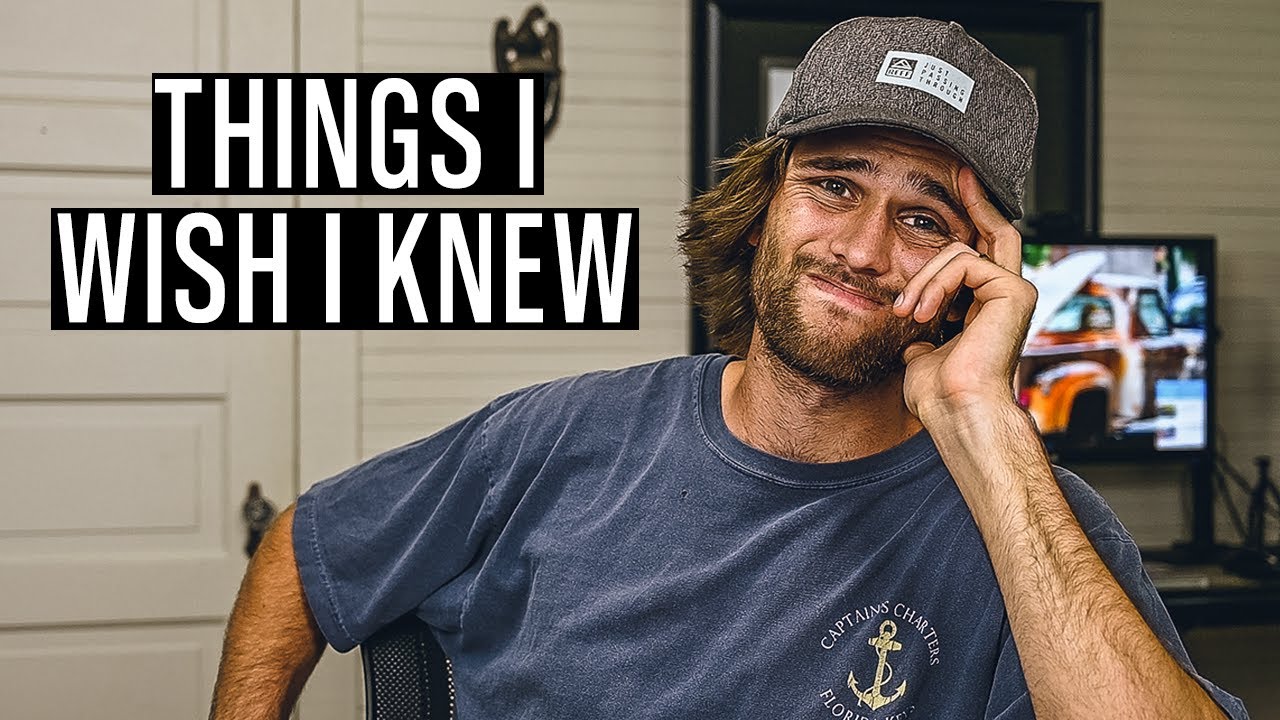
Forrest Knight spent years grinding through computer science coursework, first at Tidewater Community College and then at Old Dominion University, where he graduated in 2018 with a focus on app development and machine learning. In his video “My Regrets as a Computer Science Student,” the working software engineer and YouTuber turns that degree into a post-mortem, walking through the specific habits and missed chances he says held him back — not academically, but in the ways that actually shape a career.
- Knight built his ODU degree around app development and machine learning, graduating in 2018 after starting his coursework at Tidewater Community College.
- His top-billed regret: sticking to a small, familiar circle of project partners instead of networking broadly with classmates and professionals.
- He frames each shortfall in the video explicitly as a “regret” — a deliberate word choice meant to separate things he simply didn’t know from things he chose not to do.
The Networking Gap
Knight’s biggest regret gets the most airtime in the video: he leaned on the same small handful of project partners for group assignments throughout his CS coursework, and never pushed past that circle. He says he underestimated just how much value sits outside a student’s immediate friend group — both in terms of picking up technical skills from people who code differently and in terms of who ends up making an introduction or forwarding a resume later on.
Networking isn’t just about future job prospects — it’s learning from other people’s skills and experiences while you still have the excuse to ask.
That’s the throughline of Knight’s argument: treating networking as a career-fair checkbox misses the point. The people sitting in the same 300-level algorithms lecture are often the fastest way to learn a debugging trick, a framework shortcut, or a study method a professor will never mention. For a deeper look at why that instinct to isolate is so common — and so costly — among new coders, Knight’s video pairs well with the discussion in The ONE THING That Holds New Programmers Back.
Skipping the Non-Technical Coursework
Knight also flags his course selection as a missed opportunity. As a CS major chasing app development and machine learning credentials, he loaded his schedule with technical electives and left little room for psychology, philosophy, or business classes. Looking back, he argues those courses would have given him a more rounded sense of how the software he builds actually lands on the people using it — a perspective that’s easy to skip when GPA and technical depth are the only things being graded.
Playing It Safe on Projects
A self-described perfectionist, Knight admits he defaulted to safe, gradeable project ideas rather than riskier ones that might have failed. That instinct protected his transcript but, in his telling, capped his creativity — the kind of experimentation that teaches you more from a broken build than a clean A ever will.
Conferences, Mentors, and the Help He Didn’t Ask For
Rounding out the list, Knight says he attended too few conferences and industry events relative to what was available, and that he was too hesitant to approach professors and mentors for feedback outside of class. Both, he argues, are underused pipelines — conferences for trend exposure and networking reps, office hours for the kind of individualized guidance that a lecture hall can’t provide. Building real relationships across a program, not just a project group, is the same principle that shows up in professional network mapping — the kind of structural thinking laid out in Relationships Mapped: Data-driven Leadership with Network Analysis.
Knight isn’t offering these as excuses — he graduated, he’s employed as a software engineer, and the video works precisely because it comes from someone who already got the outcome most CS students want. The point he keeps circling back to is timing: the networking, the electives, the risk-taking all needed to happen while he was still enrolled and had free access to classmates, professors, and campus events, not after the diploma made those doors harder to walk through.





First boat to make its own hydrogen fuel from seawater
Machine Learning: Living in the Age of AI | A WIRED Film
Risking My Life To Settle A Physics Debate
Top 10 Energy Sources of the Future
DEMA SHOW 2019: The One New Scuba Gear Everyone Is Talking About!