

 InfoSearched
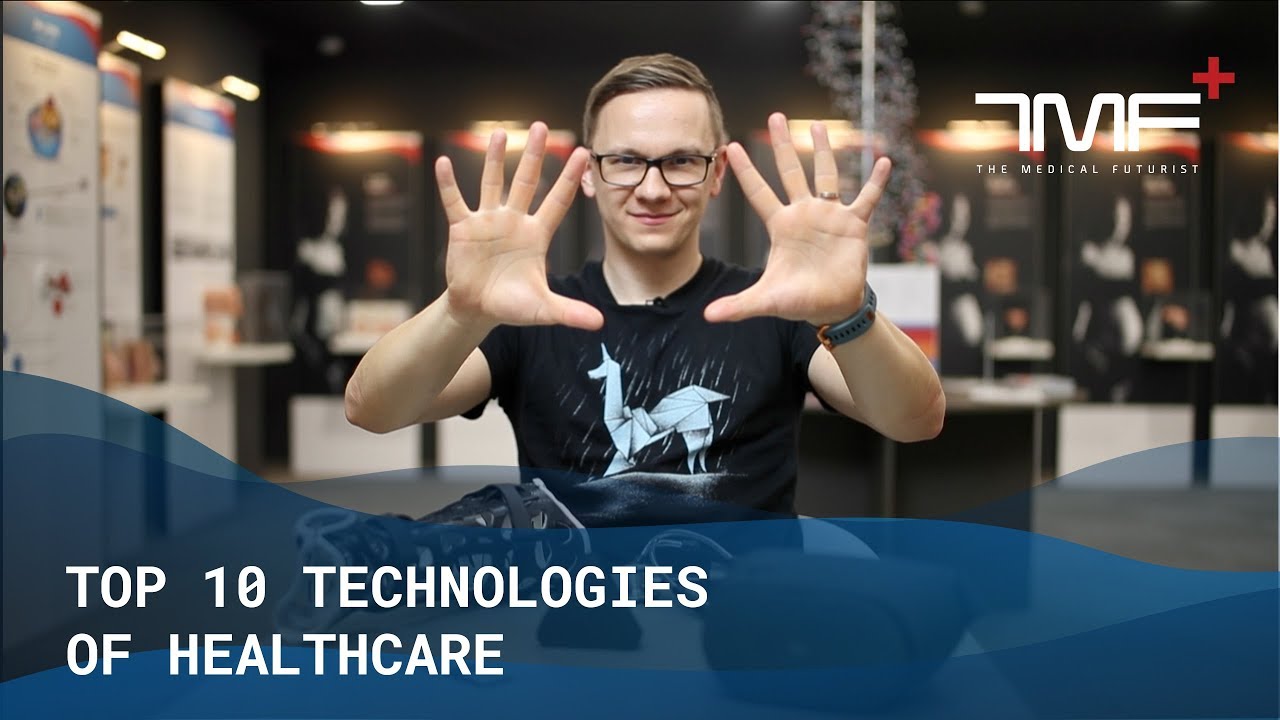
Dr. Bertalan Meskó ranks the ten medical technologies actually moving from lab bench to bedside.
Digital health has produced more buzzwords than any single doctor can track, so Bertalan Meskó did the sorting for everyone else. The physician and genomics researcher who runs The Medical Futurist Institute built an updated ranking that strips away the science-fiction framing and asks a plainer question: which technologies are already changing how patients get treated? His answer spans seven distinct pillars, from remote monitoring to robotic surgery, tied together by one argument — the tech only matters if it puts the patient, not the hospital, at the center of the process.
- Dr. Bertalan Meskó, a physician and genomics researcher who directs The Medical Futurist Institute, built the update around seven technology pillars rather than treating disruption as speculative science fiction.
- Telemedicine and wearable health sensors shift the point of care away from hospitals and into patients’ homes, cutting costs while expanding access to monitoring and consultations.
- AI and deep learning, genomics and immunotherapy, 3D bioprinting, VR/AR, and robotics and telesurgery each target a specific clinical bottleneck — diagnostic accuracy, precision cancer treatment, tissue scaffolds, pain management, and surgical precision, respectively.
The Pillars Behind the Update
Meskó’s presentation doesn’t rank gadgets by novelty; it groups them by the problem they solve. Telemedicine and wearables and health sensors both attack the same target — getting care out of the hospital and onto the patient’s wrist or living room couch, where continuous biometric tracking becomes routine rather than exceptional. That pairing alone reframes the video’s title: this isn’t a list of ten unrelated inventions but seven overlapping systems that reinforce each other once adopted together.
Artificial intelligence and deep learning sit at the analytical core of the framework, processing the clinical big data and medical imaging that telemedicine and wearables generate in the first place. For readers who’ve followed how AI keeps reshaping other industries, the throughline connects to broader coverage of machine learning’s expanding footprint — medicine is simply one of the highest-stakes proving grounds.
Precision Medicine and the Immune System
Genomics and immunotherapy occupy the pillar Meskó treats as the most consequential for cancer care: targeted gene therapies and immune-system retraining designed to attack complex diseases with far more specificity than older chemotherapy regimens. Rather than treating every tumor the same way, this approach customizes treatment to a patient’s own genetic and immune profile — the kind of personalization the whole presentation argues should define modern medicine.
Technology alone changes nothing until patients are put at the center of their own care.
That line captures the spine of Meskó’s argument better than any single gadget on the list. Genomics and immunotherapy only deliver on their promise, he argues, when clinicians pair the science with a workflow built around the individual patient rather than the institution treating them.
Rebuilding the Body
3D bioprinting and advanced materials make up the pillar aimed furthest into the future: biomaterials, tissue scaffolds, and customized implants working toward eventual synthetic organ generation. It’s a slower-moving category than telemedicine or wearables, but Meskó frames it as the logical endpoint of precision medicine — treatment customized down to the literal materials replacing a patient’s tissue. That ambition tracks with other coverage of how prosthetics and implants are being redesigned around the individual, a shift explored in depth in how the future of prosthetics is redefining humanity.
Robotics and telesurgery round out the physical-intervention side of the list — minimally invasive robotic systems that let surgeons operate with a level of precision hard to match by hand, and in some cases, from a remote location entirely. Paired with VR and AR tools used for pre-operative surgical visualization, non-pharmacological pain management, and phobia treatment, the surgical and immersive-tech pillars reinforce each other throughout a patient’s treatment timeline, from planning to recovery.
The Cultural Shift Meskó Says Has to Happen
The presentation’s closing argument is the one most likely to get lost in a list of ten flashy technologies: none of it works without a cultural shift. Clinicians have to learn to collaborate with algorithms instead of treating them as a threat, and patients have to be equipped and expected to manage more of their own care using the same wearables and telemedicine tools generating their health data. Readers tracking how medical tech has evolved year over year can see the pattern building across earlier snapshots, including the roundup of new medical technology in 2019.
The word “UPDATED” in the title is the tell here — Meskó and The Medical Futurist Institute treat this as a living ranking, not a one-off list, revisiting it as pilot programs at individual hospitals turn into standard practice. The next version of this list won’t look identical, and that’s the point: the technologies that stay on it are the ones that actually made it out of the trial phase.






Tesla Valve Explained With Fire
This researcher created an algorithm that removes the water from underwater images
10 Most Insane Secret Military Technologies
Your Life, Brought to You by Video Games
Finland Might Have Solved Nuclear Power’s Biggest Problem