

 InfoSearched
A Tesla on Autopilot heads straight for a concrete barrier — and the software doesn’t even flinch.
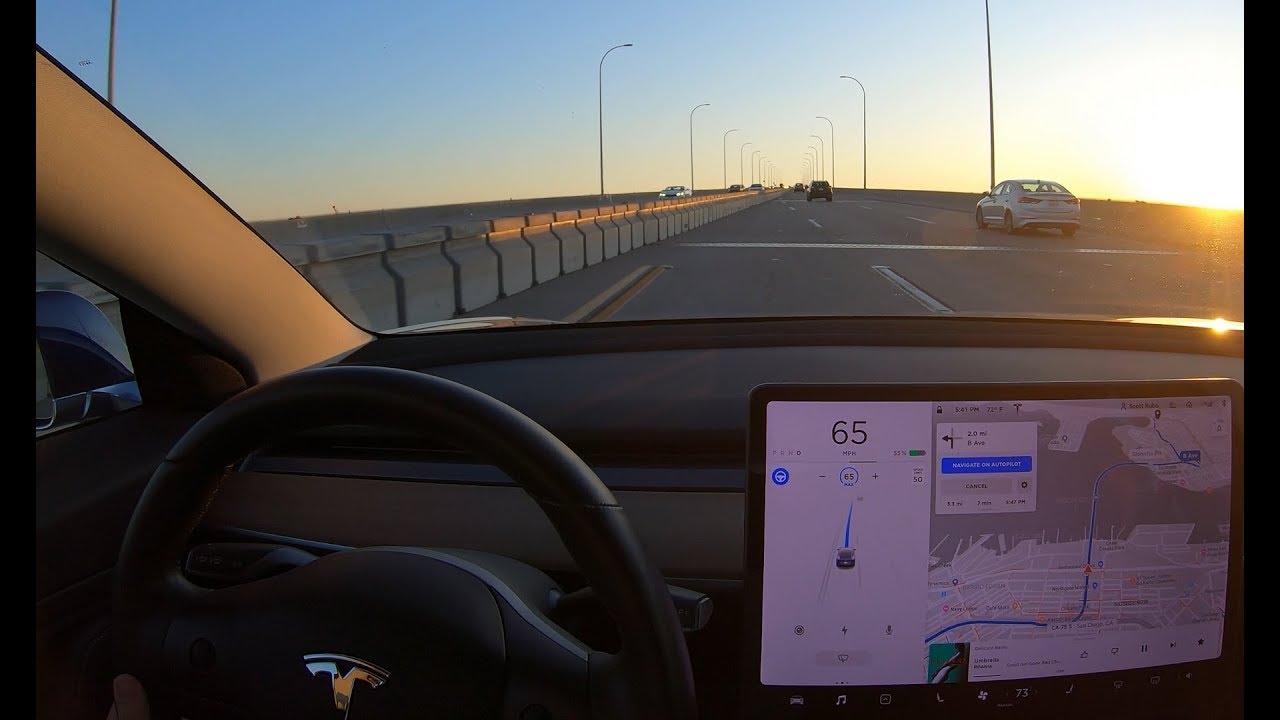
Scott Kubo didn’t set out to make a safety video. The EV enthusiast and YouTuber was just driving his Tesla Model 3 through a highway construction zone with Autopilot engaged when he noticed the car wasn’t reacting to a temporary concrete barrier jutting into his lane. The resulting clip, titled “Tesla Autopilot Drives Straight Towards Concrete Barrier on Highway,” is a blunt demonstration of exactly where Tesla’s driver-assist system draws its limits.
- Kubo’s Model 3 ran Autopilot Hardware 2.5 (AP 2.5) on Tesla Software V10, specifically firmware version 2019.32.12.1.
- In a construction zone, Autopilot tracked the highway’s painted lane lines directly toward a temporary concrete barrier blocking the path, rather than recognizing the physical obstruction.
- Kubo, who kept his hands on the wheel and stayed attentive, disengaged Autopilot and steered away manually to avoid a collision.
Analysis of Captured Video Footage
The setup is simple: a stretch of highway under construction, lane markings still painted where they’ve always been, and a concrete barrier placed in the middle of that path to redirect traffic. Autopilot, reading the old lane lines rather than the new obstacle, keeps the Model 3 centered on a heading that leads straight into the barrier. There’s no slowing, no lane-departure correction away from the hazard — the car simply follows the paint.
Kubo’s intervention is the entire point of the video. He disengages Autopilot and takes the wheel himself before the barrier becomes a problem, which is exactly the kind of “hands-on, eyes-up” supervision Tesla tells owners is mandatory every time the system is active.
Lane Keeping Challenges in Construction
AP 2.5’s lane-tracking relies heavily on camera-based recognition of lane markings, and construction zones are a known weak spot across the driver-assist industry, not just for Tesla. When a barrier gets dropped into a lane but the old paint stripes remain visible, the system has conflicting inputs: the markings say “go straight,” the physical world says otherwise. Kubo’s video shows the software siding with the paint.
The lane lines said go. The concrete barrier said stop. Autopilot picked the lines.
That’s the core limitation V10 and AP 2.5 hardware carry into any active work zone — the system isn’t reliably distinguishing a stationary jersey barrier from open road, which is precisely why Tesla frames Autopilot as a driver-assist feature and not a substitute for attention.
The Broader Pattern With Tesla’s Driver-Assist Rollouts
Kubo’s demonstration lands amid a steady stream of owner-generated stress tests on Tesla’s Autopilot and Full Self-Driving features, the kind of real-world documentation that’s become its own genre on YouTube. Other creators have run their own marathon and stunt-style tests of the system’s reliability — including a widely watched 24-hour Autopilot endurance run — while Tesla’s broader product lineup has drawn its own share of public scrutiny, from the Cybertruck tug-of-war stunt to owner projects chronicled in builds like the Truckla conversion updates. Kubo’s video fits that same lane: an owner putting the system through a real scenario and publishing exactly what happened, warts included.
What makes this clip useful rather than alarmist is that nothing bad actually happened — because Kubo was doing what Tesla asks every Autopilot user to do. He caught the barrier, took the wheel, and steered clear well before it mattered. The footage is less a crash story than a checklist item: work zones, temporary barriers, and repainted lanes are exactly the moments V10 and AP 2.5 need a human ready to grab the wheel, no exceptions.


A DAY (NIGHT) in the LIFE of a NOC ENGINEER!
First boat to make its own hydrogen fuel from seawater
How Japan is using Space Technology in Natural Disasters
Solar Yacht: Silent Yachts 55 Technical Tour
THE FUTURE U.S. ARMY – FUTURISTIC WEAPONS FROM D.A.R.P.A. (National Geographic Documentary