

 InfoSearched
A steel tube pumped down to near-vacuum could get you from downtown to downtown at 700 mph.
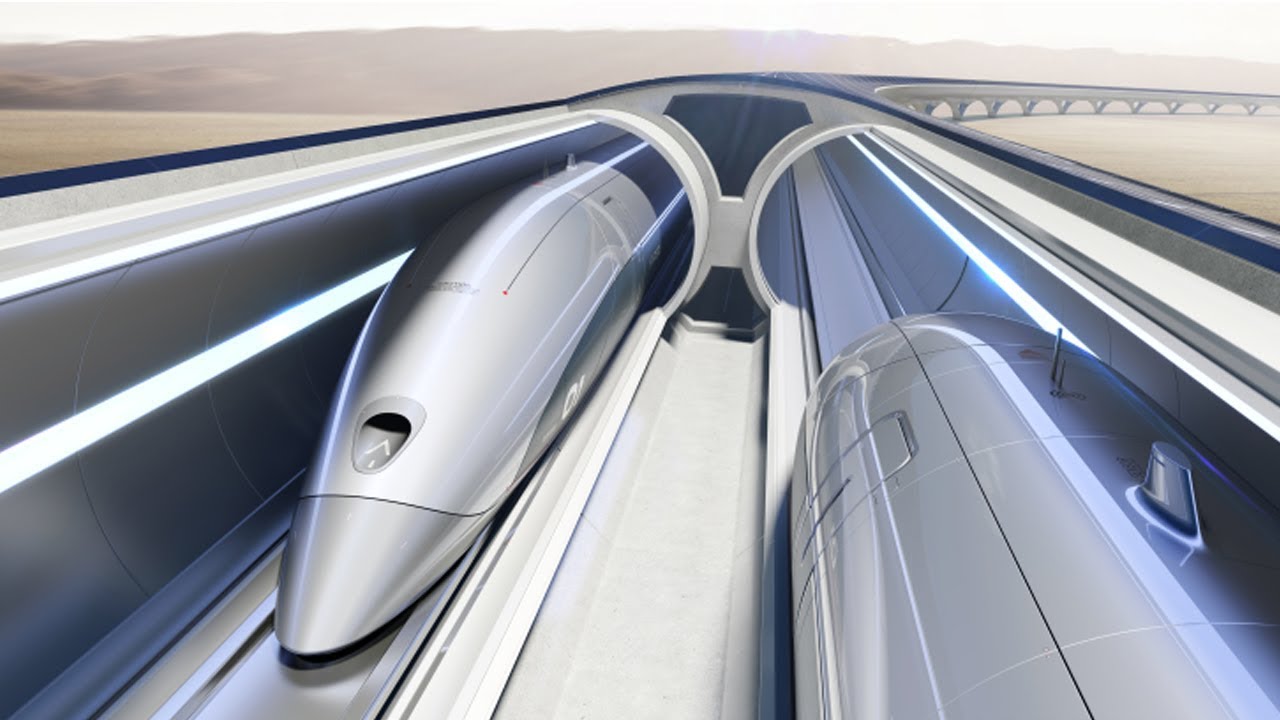
Hyperloop is the idea that broke out of Elon Musk’s head in 2013 and has been chased by engineers, architects and infrastructure firms ever since. The pitch is simple: strip the air out of a sealed tube, float a pod on magnets or air bearings inside it, and fire it down the line with linear induction motors. No drag, no rolling resistance, no reason a trip that takes six hours by car couldn’t take thirty minutes.
- Elon Musk published the open-source ‘Hyperloop Alpha’ white paper in August 2013, proposing passenger and cargo pods levitating inside near-vacuum steel tubes at theoretical speeds of 700 to 760 mph.
- Virgin Hyperloop One and Hyperloop Transportation Technologies (HyperloopTT) emerged as the two leading commercial developers, with HyperloopTT building a test track in Toulouse, France.
- Dubai has floated a cargo-focused hyperloop network built with architecture firm Foster + Partners and logistics giant DP World.
The Alpha Paper That Started It All
Musk had no intention of building Hyperloop himself when he released ‘Hyperloop Alpha’ in August 2013. It was a white paper, not a business plan — a set of engineering concepts he handed to the public because, as he put it at the time, he was too busy running Tesla and SpaceX. The document laid out capsules riding through sealed steel tubes depressurized to near-vacuum conditions, eliminating the air resistance that caps how fast a train or car can realistically go. Musk’s numbers put top speed in the 700 to 760 mph range — fast enough to make a Los Angeles-to-San Francisco run in well under an hour.
Mechanical Propulsion Systems of Pods
Strip away the marketing and Hyperloop comes down to three systems working together. The tube itself is the low-pressure environment — partially evacuated so pods burn far less energy fighting drag. The pods levitate, either through magnetic levitation or air-bearing suspension, so there’s no wheel-on-rail friction slowing things down. And linear induction motors handle propulsion, accelerating the pod and holding its speed for the length of the route. It’s the same physics that lets a maglev train glide, just inside a tube with most of the air removed.
Strip the air out of the tube, float the pod on magnets, and the two biggest enemies of speed — drag and rolling resistance — simply aren’t there anymore.
The Companies Racing to Build It
Since 2013, the field has split between rival firms chasing Musk’s concept. Virgin Hyperloop One and Hyperloop Transportation Technologies have become the two most visible names, each pursuing its own pod design and propulsion architecture. HyperloopTT went as far as building a working test track in Toulouse, France, to prove out its system beyond paper renderings. Anyone wanting the deeper commercial and engineering picture should check the Q&A on Hyperloop and the future of transport technology with Anita Sengupta, who worked directly on pod development.
Cargo Before Passengers: The Dubai Proposal
The most concrete near-term application isn’t ferrying commuters — it’s freight. Dubai has been developing a cargo hyperloop network in partnership with architecture firm Foster + Partners and port operator DP World, aiming at automated, high-speed goods movement rather than passenger service. Moving cargo first sidesteps the toughest problem in the whole concept: passenger safety inside a tube evacuated to near-vacuum and traveling at hundreds of miles per hour.
The Engineering Hurdles Still in the Way
None of this is close to a solved problem. Steel tubes running for hundreds of miles expand and contract with temperature swings, which has to be engineered around without breaking the seal that keeps the vacuum intact. Maintaining that vacuum over long distances is expensive and mechanically demanding — any leak degrades the whole performance case. Routes also need to stay nearly straight, since curves that a conventional train tolerates would be brutal at Hyperloop speeds. Every one of those constraints has to be solved before regulators anywhere sign off on carrying passengers commercially. For more on how transport engineers are tackling next-generation mobility problems like this one, see 10 Coolest New Methods of Transportation.
Right now the technology exists in test tracks and white papers, not in ticketed service — Toulouse proves pods can move, Dubai’s cargo plan proves there’s commercial appetite, but nobody has strung a route long enough or fast enough to hit those 700-mph numbers Musk sketched out back in 2013. Whichever company gets a full-scale line running first won’t just win a race between rivals — it’ll settle the argument over whether the physics in that original paper actually holds up outside a test tube.


subnetting is simple
A Potentially Habitable Super Earth Has Been Discovered
The danger of AI is weirder than you think
Making a DRIVETRAIN and Installing the Micro V4 ENGINE on the RC Car!
Tesla Valve Explained With Fire