

 InfoSearched
Eight real operating rooms show how far modern surgery has actually come.
Insider Tech’s video compilation “8 Medical Procedures That Are Improving Lives” skips past lab theory and drug trials to focus on something more immediate: the operations already changing what patients can survive, see, and look like. Published across Insider’s platforms on June 16, 2019, the video walks through eight distinct clinical interventions spanning reconstructive and corrective medicine. It’s less a science explainer than a tour of the operating room, built around procedures that are already standard practice in hospitals rather than pipeline research.
- Insider Tech published “8 Medical Procedures That Are Improving Lives” on June 16, 2019, profiling eight distinct clinical operations rather than theoretical research or drug therapies.
- The compilation spans reconstructive and corrective medicine, from full face transplants that restore function and identity after severe facial trauma to LASIK eye surgery, which reshapes corneal tissue to correct vision impairments.
- Across the eight procedures, the video documents how modern techniques, robotic precision, and advanced surgical equipment have cut recovery periods and reduced risk for patients.
A Compilation Built on Operations, Not Theory
What separates this video from a typical medical-breakthroughs roundup is its focus on the procedure itself — the surgery, the equipment, the recovery timeline — rather than the research that led up to it. Insider Tech frames each entry as a working intervention already happening in operating rooms, not a promising study still years from clinical use. That framing puts the compilation closer to the kind of hands-on medical technology coverage found in pieces like New Medical Technology In 2019, which similarly tracks tools already in use rather than concepts still in development.
Face Transplants: Rebuilding More Than Tissue
The most dramatic entry in the compilation is the full face transplant — a microsurgical procedure that reconnects nerves, blood vessels, muscle, and skin to restore both function and appearance to patients with catastrophic facial trauma. These operations require surgical teams to match donor tissue with extraordinary precision and then spend hours reattaching structures under a microscope, a level of complexity that puts face transplantation among the most technically demanding procedures in reconstructive surgery.
Full face transplants don’t just rebuild a patient’s appearance — they restore the function and identity that severe trauma took away.
The video treats this procedure as the clearest example of how far reconstructive medicine has advanced: operations that would have been unthinkable a generation ago are now documented, repeatable interventions with real recovery protocols behind them.
LASIK: Precision Measured at the Microscopic Level
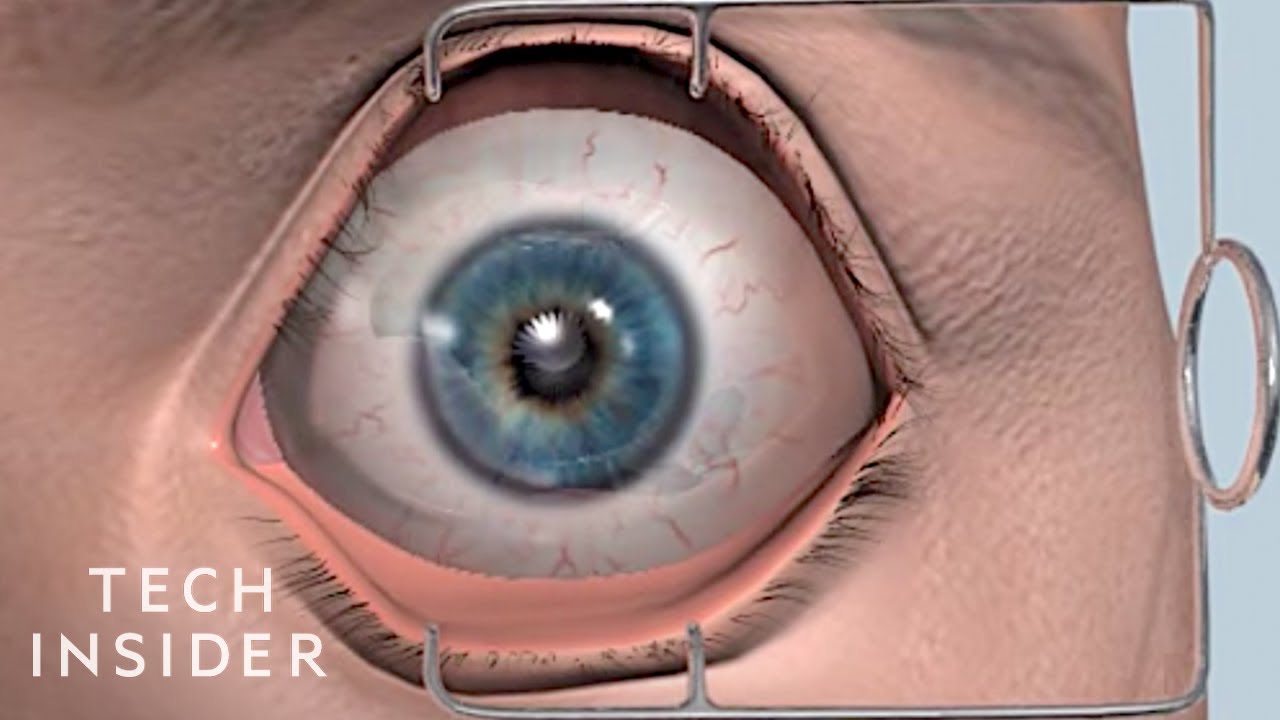
On the other end of the spectrum sits LASIK — laser-assisted in situ keratomileusis — which the video uses to show how correction surgery has become almost routine. The procedure reshapes corneal tissue with microscopic precision to fix refractive vision errors, and it stands in the compilation as a contrast to the face transplant: instead of a marathon reconstructive operation, it’s a fast, high-volume outpatient procedure that has become one of the most common elective surgeries performed today.
Placing LASIK alongside face transplants lets the video make its point without narration doing much of the work — corrective and reconstructive medicine sit on the same continuum, just at wildly different scales of complexity and duration.
The Common Thread: Robotics and Shorter Recovery Windows
Across all eight procedures, the video’s throughline is equipment, not just technique. Robotic-assisted tools and more precise surgical instruments show up repeatedly as the reason recovery periods have shrunk and complication rates have dropped. That same theme — machines making surgery smaller, faster, and safer — runs through other coverage in this space, including The Top 10 Most Promising Medical Technologies, which tracks the broader push toward less invasive, tech-driven care.
For a patient facing either end of that spectrum — the months of rehabilitation after a face transplant or the same-day turnaround after LASIK — the video’s real argument is that the gap between “major surgery” and “routine procedure” keeps getting smaller, and the equipment on the table is the reason why.





A beginner’s guide to quantum computing | Shohini Ghose
Sustainable energy: New energy innovations to make the future brighter – Compilation
MIT’s Breakthrough Energy Technologies
The FUTURE of Energy Efficient Technology!
10 Most Insane Secret Military Technologies