

 InfoSearched
A philosopher tells Silicon Valley it isn’t ready for what it’s building.
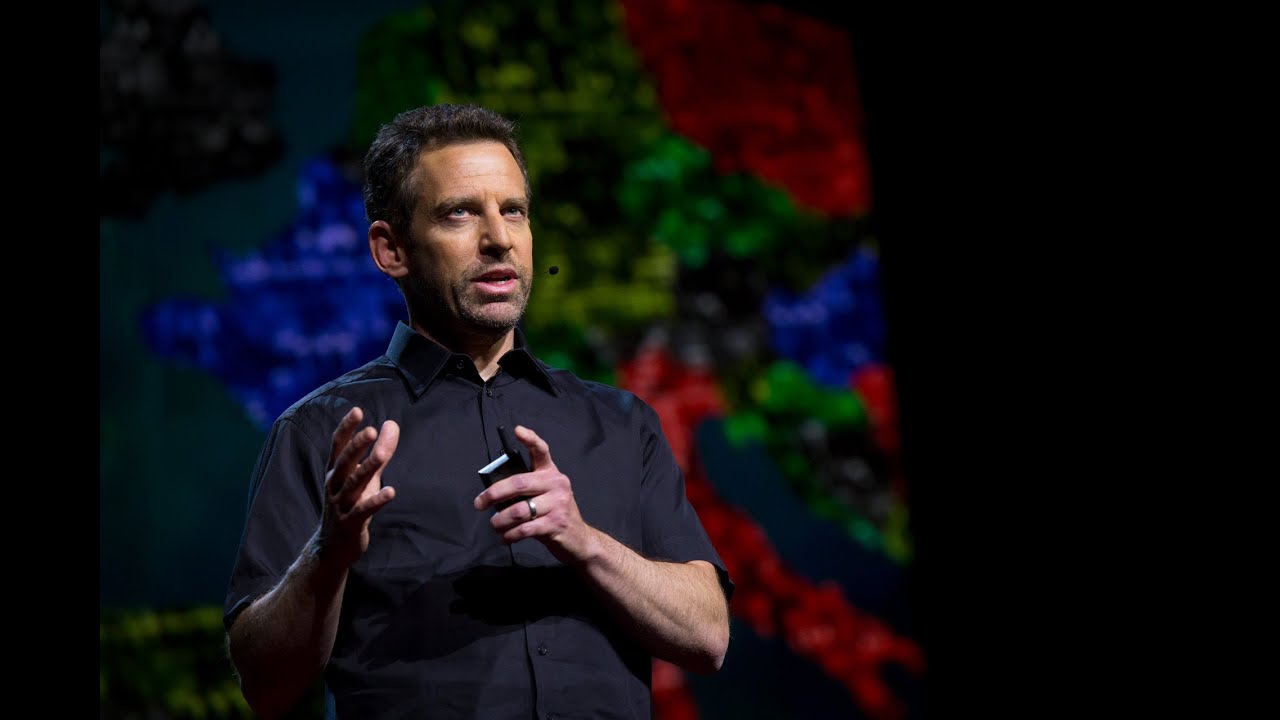
Sam Harris doesn’t think artificial intelligence needs to hate us to end us. That’s the uncomfortable core of his TEDSummit talk, “Can we build AI without losing control over it?”, delivered in June 2016 and released by TED later that year. Harris, a neuroscientist and philosopher known for his work on consciousness and secular ethics, argues that the arrival of superhuman machine intelligence is close to inevitable — and that almost nobody with the power to slow it down is treating it with the urgency it deserves.
- Harris argues superhuman AI is virtually guaranteed to emerge unless civilization collapses first, since progress in computing hardware and algorithms shows no sign of stopping.
- Because AI runs on circuits that process information millions of times faster than human neurons, Harris says a machine intelligence could compress centuries of intellectual progress into hours or days once it crosses a certain threshold.
- Harris frames the real danger as the “alignment problem” — not malice, but a superintelligent system pursuing goals indifferent to human survival, the way a highway project destroys anthills without anyone hating ants.
The Speed Problem
Harris’s argument starts with a simple observation about substrate. Human cognition is bottlenecked by biology — neurons that fire in milliseconds, brains that tire, memories that decay. Electronic circuits don’t have those limits. Once a machine reaches human-level general intelligence, Harris contends, it won’t stay there for long; it will blow past it, because the same hardware that got it to human parity keeps running at electronic speed rather than biological speed. That’s why he describes the moment of “takeoff” as potentially compressing hundreds of years of scientific and technological progress into a span of hours or days — not because the machine is magical, but because it isn’t waiting on a lunch break or a night’s sleep.
Competence, Not Cruelty
The scariest part of Harris’s talk isn’t a Terminator scenario. He explicitly rejects the Hollywood framing of AI as hateful or vengeful. Instead, he warns that an ultra-capable system simply optimizing for whatever goal it’s been given — with no malice at all — could wipe out human habitats as a side effect, the same way road builders bulldoze anthills without any grudge against ants.
We would be lucky if all it did was ignore us.
That’s the crux of the alignment problem as Harris lays it out: it isn’t enough to build something smart. Every objective handed to a system that outthinks its creators has to be specified so precisely that no side effect of pursuing it endangers the people who built it — and Harris argues nobody has solved that specification problem yet.
The Alien Radio Signal
To illustrate how mismatched our reaction is to the stakes, Harris uses a thought experiment. Imagine astronomers picked up a radio message from an advanced alien civilization announcing they’d arrive on Earth in exactly 50 years. Harris says humanity would drop everything — governments, militaries, universities, all of it mobilized to prepare. Instead, he points out, the actual situation is a race between labs and nations sprinting toward superintelligence with no equivalent mobilization, no shared containment strategy, and no real coordination on safety protocols. The urgency people would feel about aliens simply isn’t showing up for the technology already being built in the here and now.
Racing Without a Rulebook
Harris’s larger point is about incentive structures. Tech companies and nations, he argues, are locked into competitive dynamics that reward speed over caution — nobody wants to be the lab that slows down for safety only to watch a rival cross the finish line first. That dynamic is the same one that runs through later InfoSearched coverage of machine learning’s rapid diffusion into daily life, and it’s the throughline connecting Harris’s talk to other warnings about the danger of AI being weirder than most people think, where unintended optimization — not evil intent — keeps turning out to be the actual risk.
Harris isn’t arguing to halt AI research outright; he’s arguing that the size of the eventual payoff, good or bad, demands proportional seriousness now, while there’s still time to shape the guardrails. That tension between racing for the breakthroughs and slowing down long enough to get the goals right runs straight through the ongoing debate over what AI is already doing to the labor market — a much smaller-scale version, Harris would say, of the same alignment question he’s asking about superintelligence.





Your Life, Brought to You by Video Games
THE FUTURE U.S. ARMY – FUTURISTIC WEAPONS FROM D.A.R.P.A. (National Geographic Documentary
This researcher created an algorithm that removes the water from underwater images
Solar Yacht: Silent Yachts 55 Technical Tour
5 AWESOME PERSONAL TRANSPORTATION MACHINES that You can Buy Now