

 InfoSearched
A hundred-year-old patent gets its most visible test yet, and it’s done with a blowtorch.
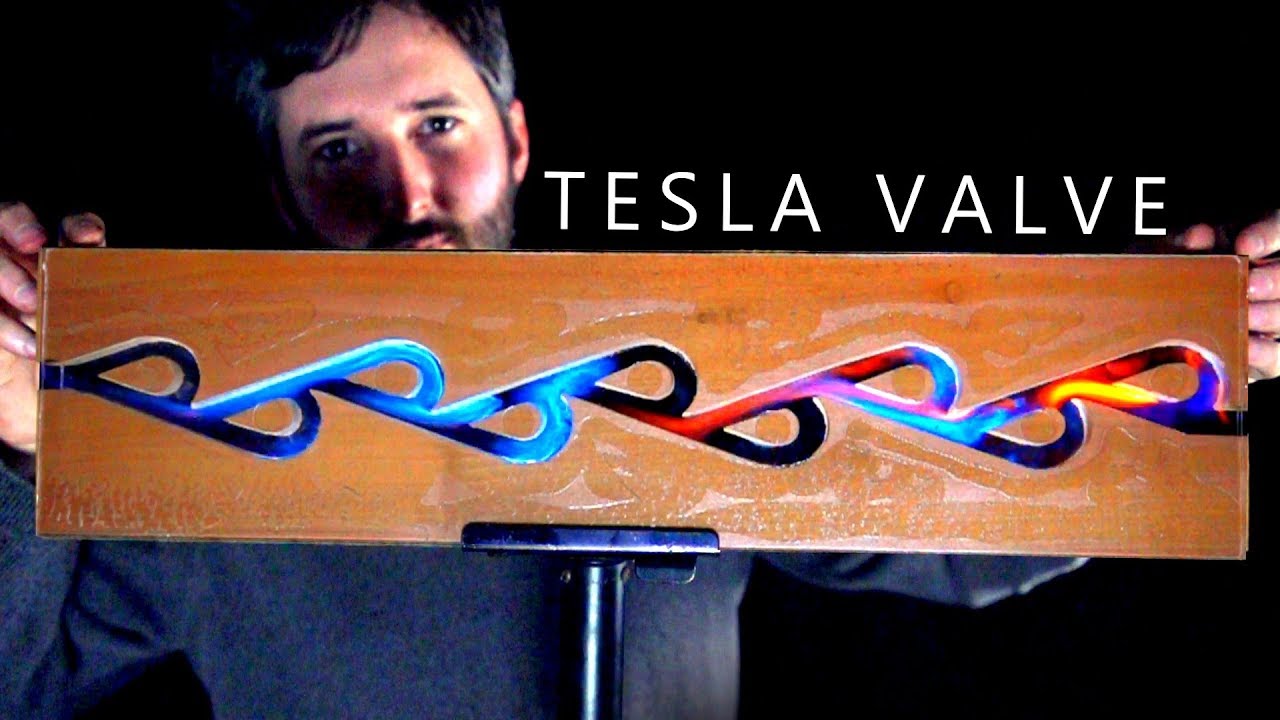
Nikola Tesla filed the patent in 1920 for a valve with no moving parts, one that could supposedly let fluid flow freely one way while choking it off in the other. It’s a strange, almost too-simple-looking idea on paper: just a series of loops and teardrop channels. In January 2020, YouTube maker Ben, who runs the channel NightHawkInLight, built a working version and set fire to the fluid running through it — literally — to finally make the physics visible.
- The device is based on U.S. Patent 1,329,559, Nikola Tesla’s 1920 design for a “valvular conduit” with zero moving parts.
- NightHawkInLight ran burning propane through a machined Tesla valve so viewers could watch the flame behave differently depending on flow direction.
- The video, “Tesla Valve Explained With Fire,” drew attention from maker and tech outlets including Adafruit and The Awesomer.
Analysis of Tesla Patent Filings
The valvular conduit isn’t a valve in the way most people picture one — no flap, no spring, no ball bearing dropping into a seat. It’s just geometry: a central channel running straight through, flanked by curved side loops shaped like teardrops. Fluid moving forward stays mostly in that central path and passes through with minimal resistance. Fluid trying to move backward gets caught by the loops, which peel off portions of the flow and redirect them back into the main stream at sharp angles.
That redirection is the whole trick. The colliding streams generate opposing vortices and turbulence that eat up energy and momentum, so the reverse flow effectively throttles itself. No moving parts means nothing to jam, wear out, or fail mechanically — which is exactly why the design has stuck around in niche engineering circles for a century without ever becoming a household name.
Making the Invisible Visible With Fire
Explaining vortex formation and backpressure in a fluid channel is a hard sell visually — you can’t normally see turbulence happening inside a sealed pipe. NightHawkInLight’s fix was to swap out water or air for burning propane. A flame reacts instantly and visibly to changes in flow rate and pressure, so the gas itself becomes the readout.
Run propane through the valve in the forward direction and the flame burns clean and steady, the gas passing through the central conduit with little obstruction. Reverse the flow and the same flame sputters, chokes, and destabilizes as the gas gets thrown into the side loops and forced into turbulent collision with itself.
Propane flows through relatively unimpeded in one direction, while attempts to push gas in the opposite direction trigger chaotic turbulence and backpressure that visibly disrupts and chokes the flame.
Industry Response to Tesla Innovations
Tesla valves already have a following among makers building microfluidic devices, 3D-printed pumps, and even DIY rocket components, precisely because a no-moving-parts check valve is cheap and durable to manufacture. What NightHawkInLight’s build did differently was strip away the abstraction — instead of describing flow resistance in a textbook diagram, the fire demonstration let viewers watch backpressure happen in real time, which is a big part of why outlets like Adafruit and The Awesomer picked it up. It’s the same instinct that drives a lot of the channel’s other builds, chasing a visual proof rather than a written explanation.
The demonstration lands in the same territory as other hands-on physics content that treats century-old engineering ideas as things worth re-testing rather than just reading about, the kind of build-it-yourself curiosity you’ll also find in projects like Tesla Earthquake Machine [3D Printed] or in a channel willing to go to real physical extremes to settle a point, like Risking My Life To Settle A Physics Debate.
NightHawkInLight didn’t stop at the flame demo — the same valve geometry shows up in his other builds involving pumps and fluidics, and it’s a safe bet the next project pushes the Tesla valve into a new application rather than just another explainer.





Goodbye Silicon! Your Next Computer Chip Could Be Made of Gallium Oxide
Watch Blue Origin’s New Shepard Rocket Launch and Land – NS-12 Mission
A Multimillionaire Surveillance Dealer And His $9 Million WhatsApp Hacking Van | Forbes
Fastest Electric Wheel Ever!
Hyperloop Explained | The B1M