

 InfoSearched
The robots aren’t coming for every job — just the ones nobody wants to talk about losing first.
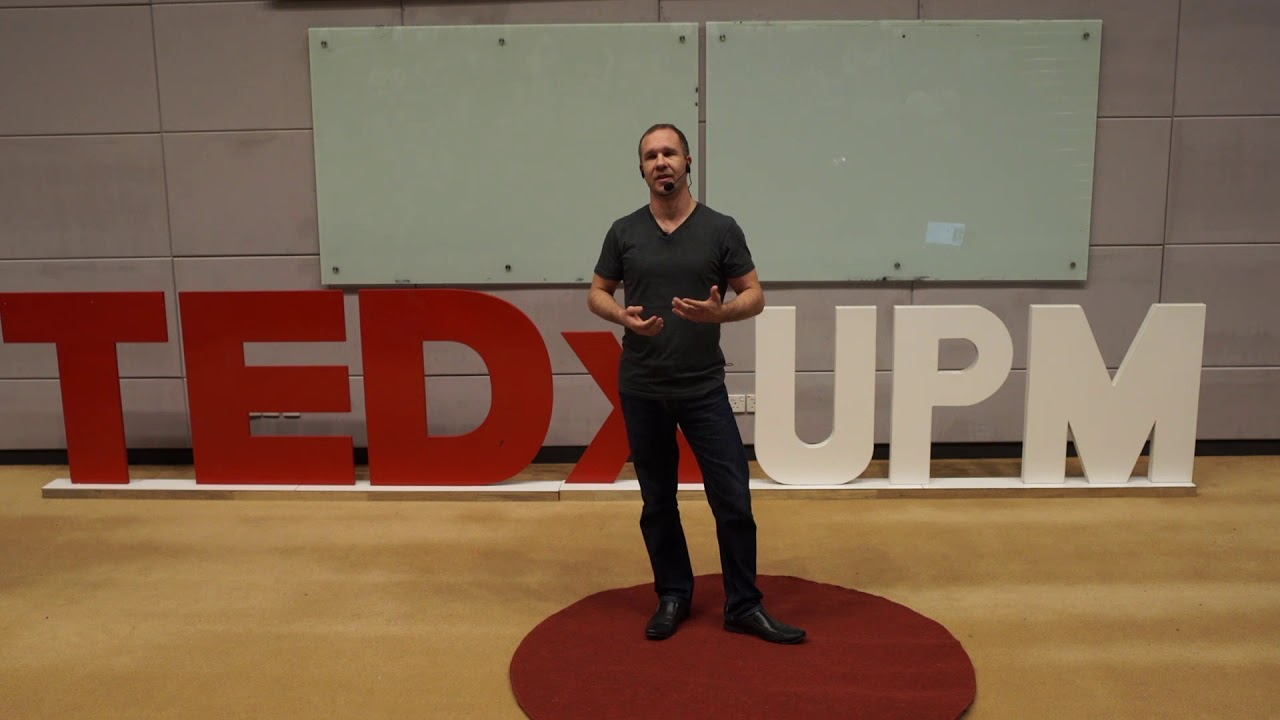
Patrick Klotz stood on the TEDxUPM stage at Universiti Putra Malaysia in November 2019 and asked the question everyone in a boardroom is thinking but few say out loud: is artificial intelligence actually going to wipe out the workforce, or is that just the panic talking? His talk, “AI is coming for your jobs…so what?”, went up on TEDx Talks’ YouTube channel on March 31, 2020, months after he delivered it, and it’s built less on speculation than on a career spent inside the machinery of enterprise IT.
- Klotz delivered the talk at TEDxUPM, held at Universiti Putra Malaysia in November 2019; TEDx Talks published the recording online on March 31, 2020.
- He is CEO and Director of Datalynx Sdn Bhd, a Malaysia-based firm running a self-developed big data analytics platform, and also leads SwissTech Solutions, which trains and consults companies adopting Industry 4.0, big data, and IoT systems.
- Klotz frames his argument by comparing past industrial shifts to today’s automation wave, using more than two decades of IT and multinational operations experience to push back against forecasts of mass technological unemployment.
A Swiss IT Veteran Reads the Room
Klotz isn’t a futurist parachuting into the AI debate from academia — he’s spent over 20 years inside IT service management and multinational operations teams, the kind of work that puts someone in the room when companies decide which processes get automated and which don’t. He relocated to Malaysia around 2015, and by the time he took the TEDxUPM stage he’d built a dual perch on the country’s tech scene: running Datalynx’s analytics platform on one side and, through SwissTech Solutions, coaching other businesses through their own Industry 4.0 and IoT rollouts on the other.
That vantage point matters for the talk’s central move. Rather than treating “AI” as one looming force, Klotz breaks the fear down the way a systems engineer would — by looking at which specific tasks get automated, which don’t, and why the difference matters more than the headline number of jobs supposedly at risk.
Lessons Pulled From Past Industrial Shifts
The core of Klotz’s case rests on history repeating a familiar shape. He walks through prior waves of industrial disruption to argue that technology has consistently reshuffled labor rather than erased it outright — displacing certain tasks while generating categories of work that didn’t previously exist. It’s the same logic that runs through Machine Learning: Living in the Age of AI, which tracks how machine learning systems are already reshaping entire professions in real time rather than replacing them wholesale.
AI disruption isn’t the elimination of work — it’s the structural evolution of it.
That framing is the spine of Klotz’s talk: automation doesn’t function as a light switch that turns jobs off, it functions as a redistribution mechanism, moving human effort away from repetitive execution and toward the parts of work that still require judgment.
Human Labor Remains Essential
Klotz’s background in big data and analytics gives him a practical read on where machines are actually strong right now — data processing, pattern recognition, decision support at scale — versus where they still fall short, namely creativity, emotional intelligence, and social judgment. That’s the same dividing line explored in The danger of AI is weirder than you think, which digs into how AI systems can behave in unexpected, hard-to-predict ways precisely because they lack the judgment humans bring to ambiguous situations.
For Klotz, that gap is where the opportunity sits. Datalynx’s own analytics platform depends on people who can interpret what the data is showing, not just software that can crunch it, and SwissTech’s consulting work exists because companies adopting IoT and Industry 4.0 tools still need humans to figure out how those tools should actually be deployed inside a business.
Retraining as the Real Bottleneck
Klotz doesn’t pretend the transition is painless. Workers whose tasks do get automated need retraining and support to move into roles that didn’t exist before the disruption hit, and that gap — not some inevitable robot takeover — is where he places the real risk. It’s the same tension underlying Sam Harris on Artificial Intelligence, where the concern isn’t that AI wipes out humanity’s role outright but that society moves too slowly to adapt its institutions and its workforce to what the technology actually enables.
His prescription, drawn straight from his own dual role running an analytics firm and a training company, is investment in education and reskilling now, before the disruption forces the issue — treating AI adoption as a managed transition rather than something to brace for and hope survives contact.
Klotz closed his TEDxUPM talk without pretending the anxiety is baseless — he just argued it’s aimed at the wrong target. The fight isn’t AI versus jobs, it’s retraining versus the clock, and that’s the argument he’s still making through SwissTech Solutions’ Industry 4.0 workshops long after the TEDx cameras stopped rolling.







A beginner’s guide to quantum computing | Shohini Ghose
Your Life, Brought to You by Video Games
The Infinadeck Omnidirectional Treadmill
Most AMAZING Recent Technology!
Beast Electric 4X4: Off Road Vehicle