

 InfoSearched
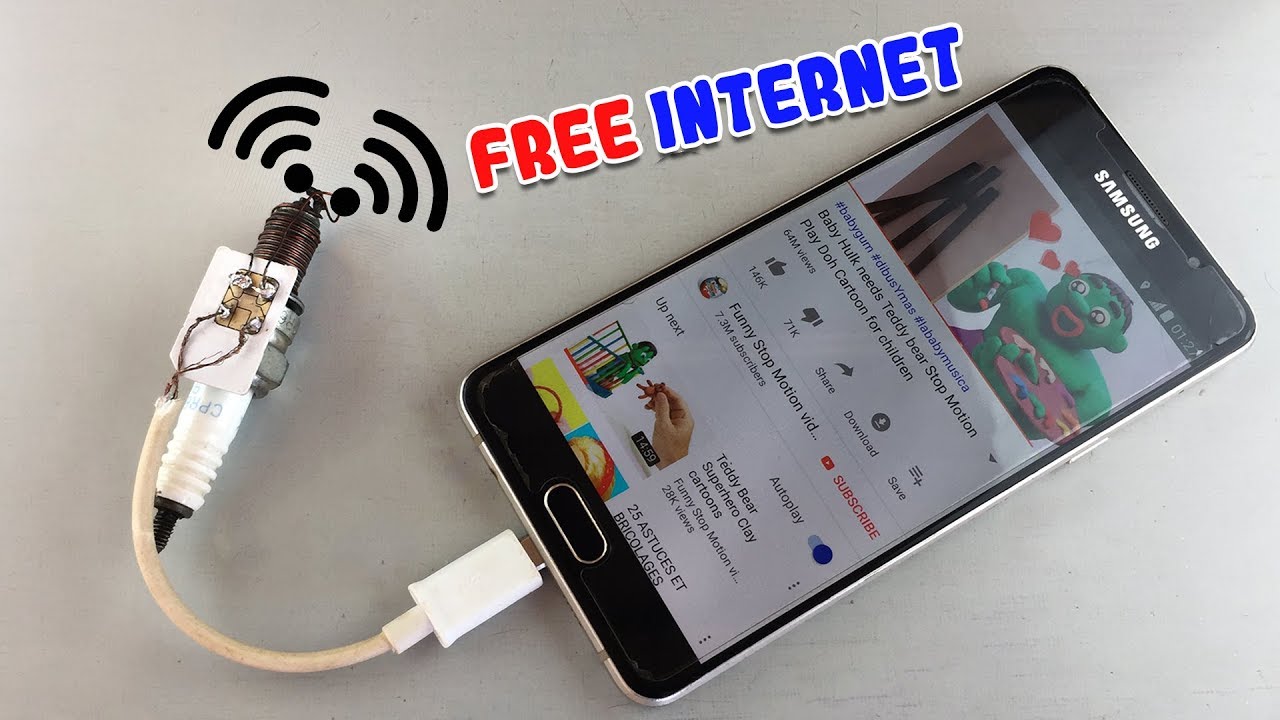
A YouTube title promises free internet, but the video is actually another magnet-and-motor “free energy” trick.
The clip, uploaded by a channel called Energy Tech and titled “New Free internet 100% – New Technology Free internet 2019,” has nothing to do with internet access at all. Strip away the keyword-stuffed title and description — “free internet,” “free internet phone 100% work,” “science projects,” “how to get free internet” — and what’s left on screen is a homemade rig built from a DC motor, a handful of magnets, a small fan, and a light bulb, presented as a self-powering generator.
- The video’s actual subject is a DIY “free energy generator” built from magnets, a DC motor, a fan, and a light bulb — not internet service.
- Its title and tags cram in unrelated trending phrases like “free internet,” “free internet phone 100% work,” and “science projects” to game YouTube’s search and recommendation algorithms.
- The demonstration depicts a magnet-driven motor running a fan and lighting a bulb, the same setup format used across a wide genre of over-unity and perpetual-motion clickbait videos.
Actual Video Evidence Presented
Once the embed loads, there’s no mention of Wi-Fi, satellites, or data plans anywhere in the footage. Instead, the presenter arranges a ring or array of magnets around a small DC motor shaft, spins it up, and connects the output to a fan blade and a light bulb, framing the spinning motor as a “free energy” source that keeps running and generating electricity with no external power input.
That basic setup — magnets, motor, fan, bulb — is a recurring template across dozens of similarly titled DIY channels. The visual trick is straightforward: a hidden battery, a concealed wire, or a brief initial spin from an off-camera power source can make a motor appear to sustain itself, especially in a tightly cropped shot with cuts and camera angles doing the heavy lifting.
Classification of Scientific Claims
Videos in this genre are flagged consistently by engineers and physicists because they claim to produce more energy than they consume, or to run indefinitely without an external input. That directly contradicts the first law of thermodynamics, which says energy can’t be created from nothing, and the second law, which guarantees that any real system loses usable energy to friction and heat over time. A magnet arrangement spinning a motor cannot generate more electrical output than the energy already stored or fed into the system — full stop.
Perpetual motion from a ring of static magnets isn’t a loophole in physics — it’s a violation of it.
Readers who want to see this kind of claim actually tested, rather than staged for a camera, might look at Risking My Life To Settle A Physics Debate, where a real experiment is used to settle a contested physical question instead of asserting one.
The Keyword-Stuffing Playbook
The description block attached to the video reads like a list dumped straight into a text box: “free energy,” “how to make,” “free energy generator,” “light bulb,” “dc moto,” “new technology,” “how to,” “ideas info,” “science projects,” “magnet,” “motor,” “electricity,” “diy,” “generator,” “energy,” “experiment,” “project,” “electric,” “magnet with fan 100%,” “experiment project 2018,” “do it by yourself,” “How to get free internet,” “free internet,” and “free internet phone 100% work.” None of those last three phrases describe anything happening on screen; they exist purely to catch searches from an unrelated, higher-traffic topic.
This is a known tactic on YouTube: pair a low-effort DIY demo with tags for a completely different, high-search-volume subject so the algorithm surfaces the video to a wider, mismatched audience. It’s the same reason so many “free energy” clips also carry titles referencing smartphones, Wi-Fi, or internet hacks that never appear in the footage itself.
Real Energy Research Looks Nothing Like This
For contrast, genuine advances in energy generation and storage go through peer review, published data, and independent replication — none of which this video offers. Readers interested in what legitimate progress on energy problems actually looks like can compare this clip against coverage like Finland Might Have Solved Nuclear Power’s Biggest Problem, where the claims are backed by engineering documentation rather than a spinning motor and a light bulb.
The magnet-and-motor trick in this video isn’t new, and it isn’t going away — channels like this one just keep relabeling the same rig with whatever phrase is trending that month. Next month it might be “free 5G,” this month it’s “free internet.” The fan still spins, the bulb still lights, and the wiring off-camera still does the work the magnets get credit for.




5 NEW Inventions 2019 | That Will Blow Your Mind
This researcher created an algorithm that removes the water from underwater images
THE FIRST EVER HOVERBIKE IN THE WORLD
A Potentially Habitable Super Earth Has Been Discovered
The Extreme Physics Pushing Moore’s Law to the Next Level