

 InfoSearched
The countdown of futuristic tech that’s already sitting in labs, not sci-fi scripts.
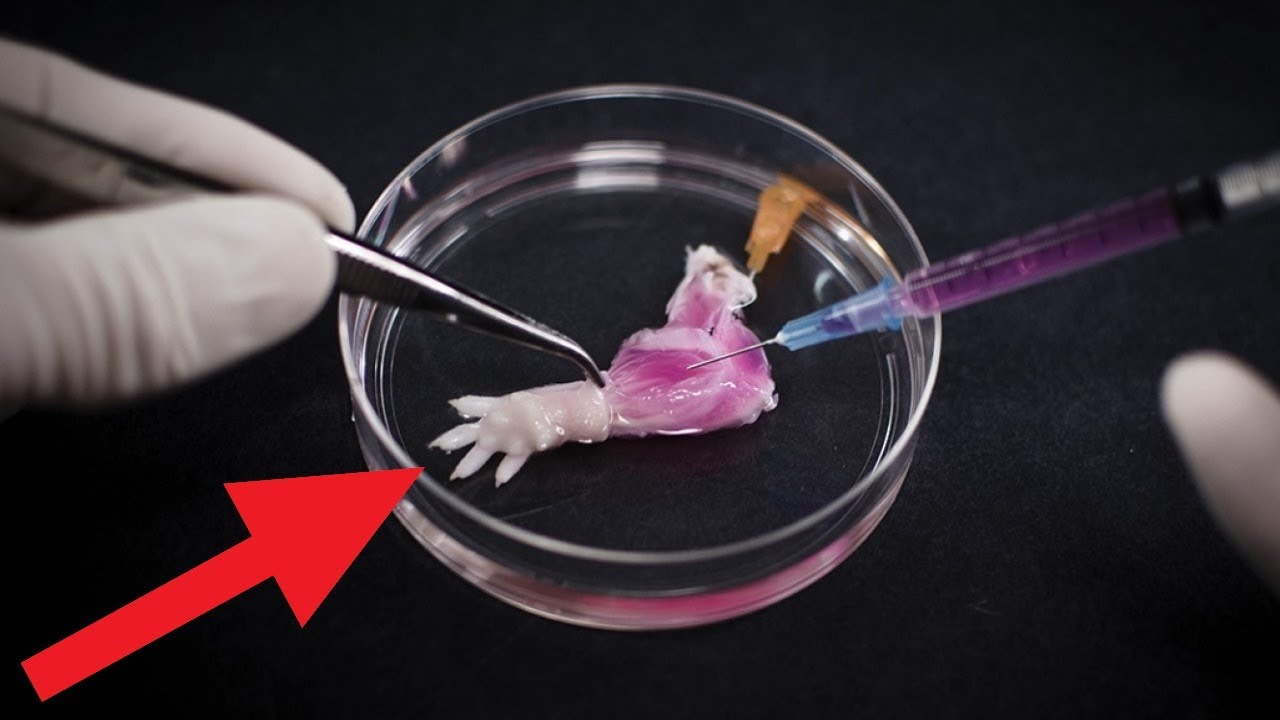
Origins Explained’s “Most AMAZING Recent Technology!” runs through a stack of biomedical breakthroughs that had already cleared proof-of-concept by late 2019, and two entries dominate the list: printing living human tissue on demand, and swapping the hypodermic needle for a jet of pressurized fluid. Neither is a concept sketch. Both had working prototypes, published research, and active clinical evaluation behind them by the time the video went up.
- Bioengineering teams, including researchers at Rice University working with open-source stereolithography setups, had printed multivascular hydrogel structures — including lung sacs that mimic real airway and blood-flow behavior.
- Labs were prototyping 3D-printed skin grafts for burn and wound repair alongside vascularized cardiac patches, liver tissue, and kidney scaffolding built layer by layer to host living cells.
- Needle-free jet injectors, which fire high-pressure micro-jets through the epidermis into intradermal or intramuscular tissue, were in clinical trials for mass vaccination uses including influenza shots.
Printing Organs Layer by Layer
The core trick behind 3D bioprinting is the same one used in industrial rapid prototyping, just aimed at cells instead of plastic. A printer scans an organ’s structure and rebuilds it layer by layer, depositing bio-ink loaded with living cells into a scaffold shape. By 2019, that process had moved well past simple prosthetics into genuinely complex biology — multivascular networks capable of carrying fluid the way real blood vessels do.
Rice University’s bioengineering group used open-source stereolithography architecture to demonstrate this directly, printing hydrogel lung sacs that expand and contract like actual airways while routing simulated blood flow through branching vascular channels. That combination — soft tissue behavior plus functioning vasculature — is the hard part of bioprinting, because a printed organ that can’t be fed by blood vessels is just a shape, not a working tissue.
Skin grafts are further along than solid organs, since flat, layered tissue is easier to reproduce than a pumping heart. Labs were already prototyping printed skin for burn and wound repair, while parallel efforts targeted vascularized cardiac patches, liver tissue, and kidney scaffolding designed specifically to keep cells alive once implanted.
A printed lung sac that mimics real airway motion and vascular blood flow is the kind of proof-of-principle result that turns “someday” into a lab bench project.
Skipping the Needle Entirely
The second major thread in the video is needle-free drug and vaccine delivery. Jet injectors use high-pressure micro-jets of fluid — no needle, no syringe — to punch through the epidermis and deposit medication directly into intradermal or intramuscular tissue. Development and clinical trials running through 2019 tested these systems specifically for mass inoculation programs, including seasonal flu vaccination.
The appeal isn’t just comfort. Needle-free delivery cuts down on needle-stick injuries for medical staff, sidesteps needle phobia that keeps some patients from getting vaccinated at all, and allows for dose-sparing intradermal injection — meaning smaller amounts of vaccine can still trigger an effective immune response. For anyone running a mass vaccination campaign, that last point matters as much as the comfort factor, since it stretches limited vaccine supply further per patient.
Logic Behind These Grouped Entries
Origins Explained frames both innovations as part of the same shift: biomedical engineering moving from theoretical research toward tools that actually get used on patients. A printed vascular lung sac and a needleless flu patch look unrelated on the surface, but both represent functional, near-deployable technology rather than distant speculation — which is exactly the throughline the video’s countdown format is built around.
Readers looking for more on where printed tissue and prosthetics research stood heading into 2020 can check out Beyond bionics: how the future of prosthetics is redefining humanity, and a broader rundown of the year’s clinical tools is covered in New Medical Technology In 2019.
None of this is printer-to-patient yet — solid organs like kidneys and livers were still at the scaffolding-and-proof-of-concept stage in 2019, and jet injectors still needed more trial data before replacing needles at your local pharmacy. But the gap between “lab demo” and “clinic-ready” on both fronts had gotten a lot smaller than most people realized, which is precisely why a countdown video built around recent tech put them near the top of the list.






Machine Learning: Living in the Age of AI | A WIRED Film
The next generation of space technology (Studio)
Q&A: Hyperloop and the Future of Transport Technology – with Anita Sengupta
Tesla Valve Explained With Fire
Making a DRIVETRAIN and Installing the Micro V4 ENGINE on the RC Car!